Access Control for Businesses – Control Over Who Enters and When
A single lost key can mean having to replace the entire locking system. That’s the kind of expense that affects businesses where many people need to go in and out through many doors.
Access control for businesses shifts access from physical keys to permissions that you manage yourself. If an employee leaves, you can revoke their access centrally—without having to track down a key.
At Keypartner, we help small and medium-sized businesses as well as large corporations with access solutions that keep operations running smoothly. We take responsibility for the entire process—from the initial assessment of the building to ongoing maintenance afterward.
Why Choose Access Control for Businesses?
Key management takes time. It also requires oversight, because no one knows for sure where the copies are.
Access I can close right awayIf a key is lost, you can deactivate it centrally. No need to reprogram the locks throughout the entire house.
Permissions by door, zone, and time period
The IT staff member enters the server room. The cleaning staff comes in the evening, but only to the areas that need to be cleaned.
Proof of Access
The access log shows who was where and when. This is useful if equipment goes missing or if the insurance company asks.
Fast onboarding and offboarding
New employees are granted access the same day. Access is automatically revoked on their last day of work.
How an Access Control System Works in Practice
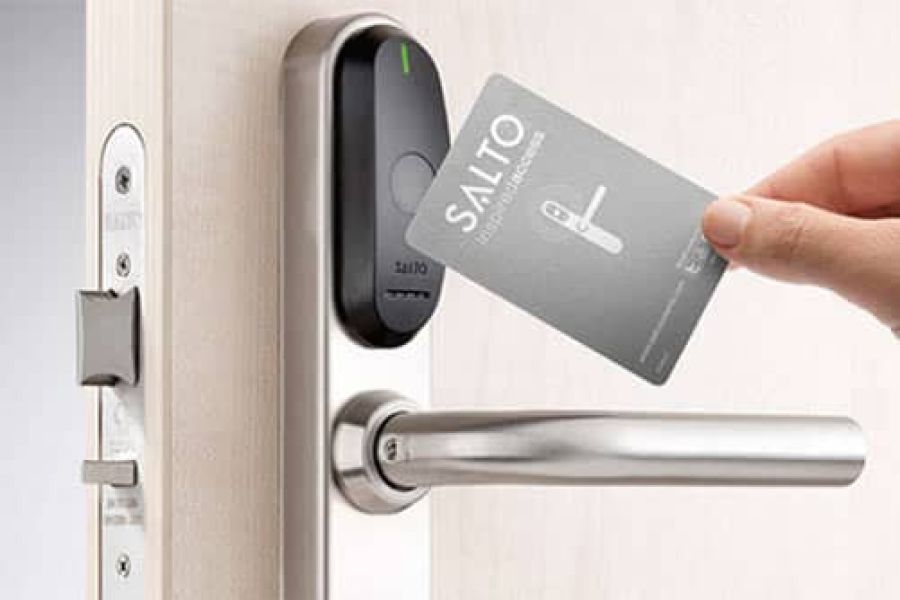
The employee holds a key fob or cell phone up to the reader at the door. The system checks the person’s access rights and opens the door only if the person is authorized to enter that specific location at that exact moment.
Behind the reader lies the part that’s critical to operations: the permissions model, which determines what each user group can do. It’s worth taking the time to set this up properly before anything goes live. A well-thought-out structure ensures that a new department or lease can be added later without requiring a redesign.
Online, offline, or a combination?
In many companies, this is the right approach. The exterior doors operate online, while the interior doors operate offline. When a user passes an online access point, the permissions on the token are updated, and the token relays this information to the offline doors.
You'll have centralized management without having to run cables to every single door. The best solution for you depends on the size of the building and how often access permissions change.
What should you consider before choosing a system?
The costly surprises in an access project rarely stem from the lock itself. They stem from what wasn't clarified in advance.
The door environment is the classic pitfall. A worn-out door with the wrong door closer will cause operational problems, no matter how good the access system is. That’s why we inspect the doors before we provide a quote.
Integrations are next. Should the access control system communicate with the automatic door opener or the intercom? If planned from the start, it costs significantly less than retrofitting.
And then there’s the question most people skip over: Who manages the system for you on a day-to-day basis? Without a designated person in charge who has access to the administration, you’ll gradually lose track of things.
We tell it like it is—before it gets expensive.
Access Control for Businesses as Part of an Overall Security Strategy
The access control system doesn't have to stand alone. We often integrate electronic access control with automatic door systems and video surveillance, so that management is centralized in one place rather than spread across multiple vendors.
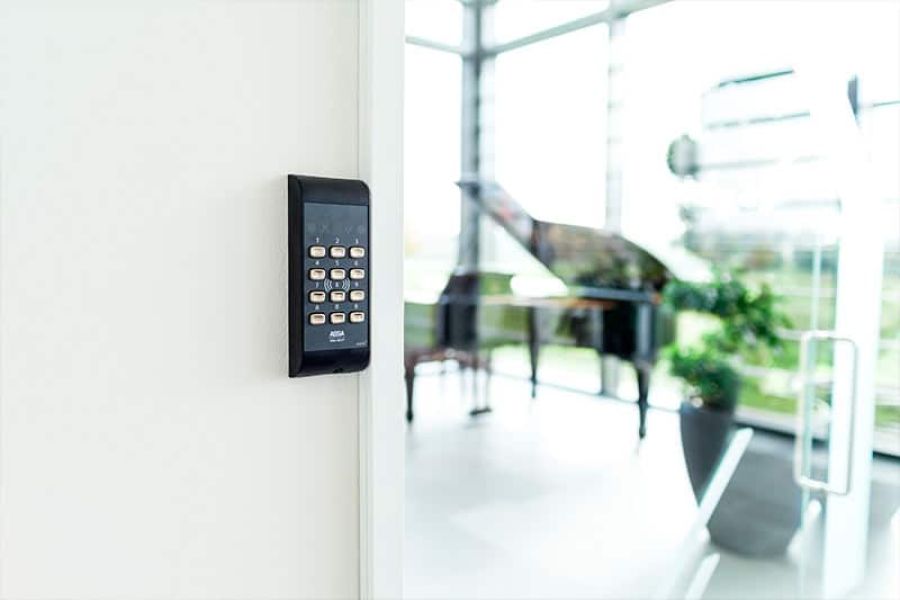
Most modern platforms support multiple access methods simultaneously. Some user groups use key fobs, while others use an app. A code is ideal for doors where no physical item needs to be handed out. For particularly sensitive doors, you can add two-factor authentication on top of that.
Less vulnerability. More control. More security.
Why choose Keypartner?
We are a team of certified technicians who have completed a four-year locksmith training program and continue to receive ongoing professional development.
We work with several of the market’s leading systems: SALTO Space, SALTO KS, SALTO Homelok, SimonsVoss, Smartair, and Stroxx with Xlock software. Because we aren’t tied to a single platform, we make recommendations based on your building and your operations.
We handle the installation ourselves, and we offer a service contract to ensure that the system is maintained going forward.
Take Your Company's Access Control to the Next Level
We’ll start with a tour of the building and a review of how you work. Then we’ll provide you with a recommendation and a quote—along with a clear explanation of what needs to be clarified before we get started.
Call us at 82 82 82 09 for a no-obligation chat. We'll take care of everything so you don't have to worry about any loose ends.
Somersault
Salto's access control solutions are scalable and can be adapted to any need, making them ideal for both small businesses and large, complex facilities.
SimonsVoss
One of the most notable features of SimonsVoss systems is their wireless locking systems that allow users to control access without the use of traditional keys, reducing complexity and increasing security.
Iloq
Iloq is known for its innovative approach to access control, offering solutions that do not require batteries or external power supply for their locks.
ARX – Access Control
Arx access control systems are systems suitable for a variety of applications, including commercial buildings, public institutions and industrial areas.
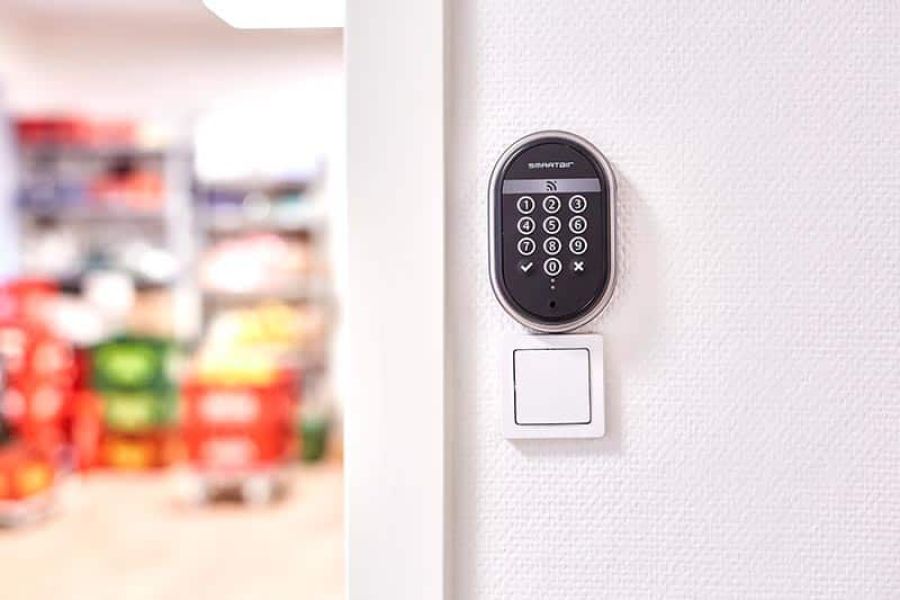
Smartair
Smartair's biggest advantage is the ability to easily upgrade existing locks to electronic access control without the need for extensive remodeling.
CLIQ
CLIQ access control combines traditional locking systems and electronic access control with programmable smart keys. It is therefore an easy solution without the use of cables.