
Access Control and Alarms – Two Systems That Should Work Together

The alarm goes off at two in the morning. No one can say whether it was an employee with valid access or whether there was actually someone there who shouldn't have been.

This happens when the two systems operate independently. Access control and the alarm system serve two different purposes: access control determines who is allowed to enter, while the alarm system responds when someone moves within the building. If they are integrated, they can answer the question immediately.

At Keypartner, we help small and medium-sized businesses as well as large companies set up access control so that the alarm system can be built on top of it.

Electronic access control with mobile phone

Get a no-obligation consultation on access control and alarm systems.

data-lazy-src="/wp-content/themes/yootheme/cache/eb/Salto-KS-adgangskontrol_messing-6-scaled-eb6d0581.jpeg"

Why Should Access Control and Alarms Be Integrated?

When the systems are independent, employees become the middlemen. They have to remember a code on the keypad next to the door, in addition to the access card they’ve already used. That’s where the errors occur.

Login and logout follow the access rules

The first employee to arrive in the morning disarms the alarm using their access credentials. The last person to leave rearms it, without anyone having to remember to do so.

Fewer false alarms

False alarms waste time and tie up response teams. If the alarm goes off because a valid user has entered the premises, the monitoring center has no reason to dispatch a response team.

A single story to read

The access log and the alarm event are assigned the same timestamp. You can see which access token was used and what happened afterward.

Matching zones

The alarm zones can be configured to correspond to the access levels you have already defined. The warehouse can remain active while the office is in use.

Here's how the interaction works in practice

The integration typically takes place between the access control system and the alarm monitoring center, which exchange signals regarding who has entered and which zone should be active. If a user presents their access card at the outer door outside of working hours, the system can deactivate the alarm for the specific zone to which the user has access rights.

The extent to which integration is possible depends on the two systems. Some combinations communicate directly with each other. Others must be linked via relays or a network integration, which limits the ability to control them in detail.

That’s why the order matters. If you choose an alarm system and an access control system separately and only ask afterward whether they can work together, you’ll often end up with the simplest solution—or an extra bill.

What does it take to make it work?

We do not supply the alarm system ourselves. We work with a regular partner on the alarm component, and we are responsible for ensuring that the entire system works—including the interface between the alarm and the access control system.

It’s worth stating this clearly, because that’s exactly where the division of responsibility causes these kinds of projects to go awry. When access control, alarm systems, and door systems are handled by different vendors, with no one taking overall responsibility, problems end up falling between the cracks.

Three things need to be clarified before anyone sets anything up. Which zones should the alarm cover, and what access levels should they reflect? Who at your organization is authorized to arm and disarm the system, and what happens if that person is on vacation? And what should happen when an alarm is triggered—call the security guard, call people on an on-call list, or something else?

We tell it like it is—before it gets expensive.

Access Control and Alarms as Part of the Overall Security System

Access and alarm systems cover two layers. Video surveillance covers a third, because the footage shows what actually happened, whereas the log only shows that a door was opened.

If your building has an intercom or an automatic door, these should be taken into account as well. An automatic door that remains open for ten seconds is relevant for both access control and alarm settings.

The foundation is still electronic access control with a well-designed permissions model. Without it, alarm zones become a matter of guesswork.

Why choose Keypartner?

We are a team of certified technicians who have completed a four-year locksmith training program and continue to receive ongoing training. We specialize in locks and access control, and that’s what your alarm system should rely on.

We work with several of the market’s leading access control systems: SALTO Space, SALTO KS, SALTO Homelok, SimonsVoss, Smartair, and Stroxx with Xlock software. Because we are not tied to a single platform, we can choose the system that integrates with the alarm system required for the job.

We install the access system ourselves, coordinate with the alarm provider, and offer a service contract afterward.

Get advice on access control and alarms

We’ll start with a walkthrough of the building, the doors, and how you use the house on a daily basis. Then you’ll receive a recommendation and a price—along with clear instructions on what needs to be clarified with the alarm provider before we get started.

Call us at 82 82 82 09 for a no-obligation chat. We'll take care of everything so you don't have to worry about any loose ends.

data-lazy-src="/wp-content/themes/yootheme/cache/be/laasesmed-til-generalforsamling-i-boligforening-1.jpg-1-beee705a.webp"
Can our current alarm system be integrated with access control?
Often, yes, but it depends on the age of the alarm system and which interfaces it supports. We’ll review the system together with our alarm partner and clearly explain what’s possible before you make a decision.
Who is responsible when two systems need to work together?
We are responsible for the access control component and for ensuring interoperability between the systems. We provide the alarm system through a regular partner. You have a single point of contact for the project and do not need to coordinate between the various teams yourself.
Should we choose the alarm system or the access control system first?
Access control is usually the foundation, because permissions and zones define what the alarm system should respond to. But the decision should be made with both systems on the table, so that integration isn’t an afterthought.
How much does it cost to integrate the two systems?
It depends on how directly the two systems can communicate with each other. Integrating two modern platforms is significantly simpler than a solution that has to be connected via relays. We’ll provide a fixed price once we’ve inspected the system.
Can we see who turned off the alarm?
Yes, when users log in and out through the access system, the access log shows which user did so and when.
class="el-image"

Somersault

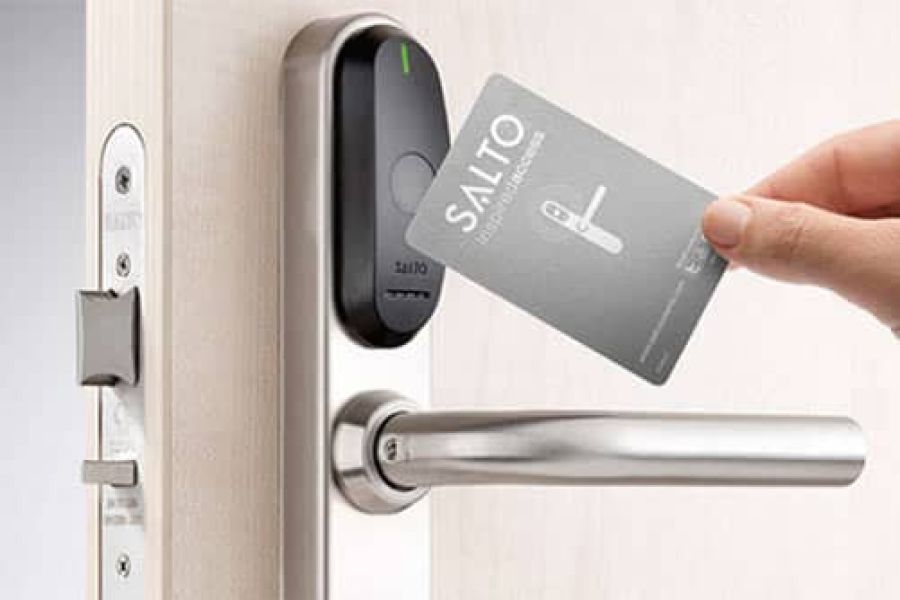
Salto's access control solutions are scalable and can be adapted to any need, making them ideal for both small businesses and large, complex facilities.
class="el-image"

SimonsVoss

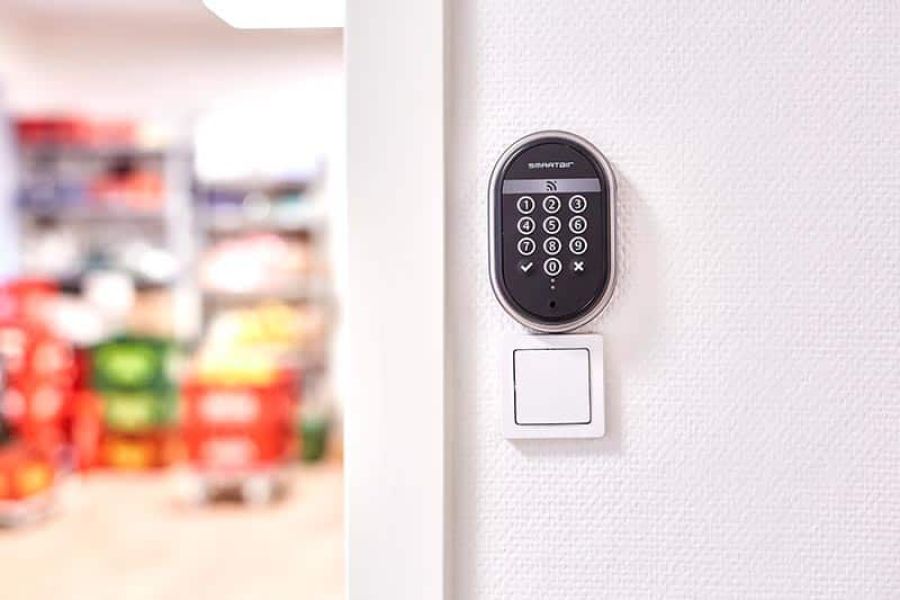
One of the most notable features of SimonsVoss systems is their wireless locking systems that allow users to control access without the use of traditional keys, reducing complexity and increasing security.
class="el-image"

Iloq

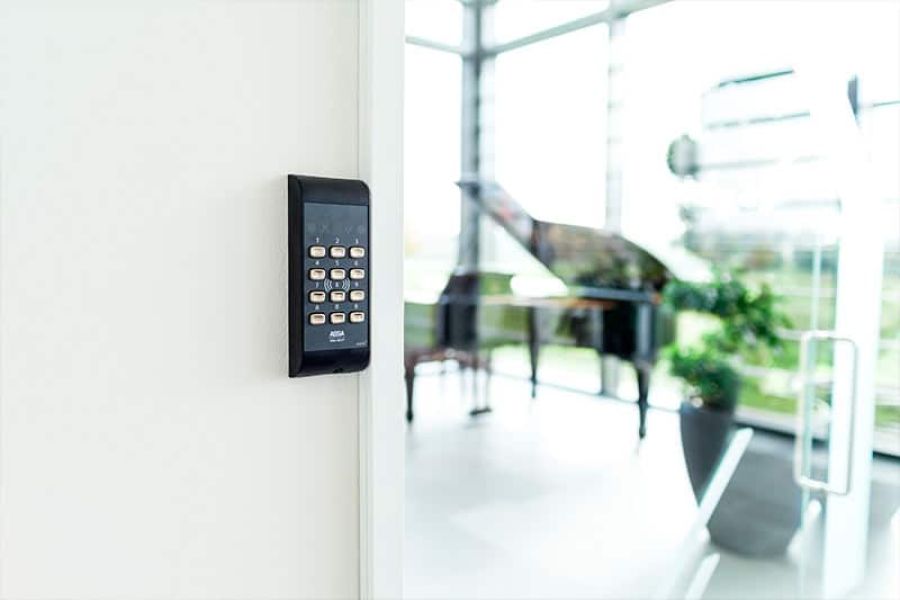
Iloq is known for its innovative approach to access control, offering solutions that do not require batteries or external power supply for their locks.

class="el-image"

ARX – Access Control

Arx access control systems are systems suitable for a variety of applications, including commercial buildings, public institutions and industrial areas.

class="el-image"

Smartair

Smartair's biggest advantage is the ability to easily upgrade existing locks to electronic access control without the need for extensive remodeling.

class="el-image"

CLIQ

CLIQ access control combines traditional locking systems and electronic access control with programmable smart keys. It is therefore an easy solution without the use of cables.