Residential Access Control – Keep Track of Who Has Access to Your Home
Keys don’t just disappear. They’re copied and passed on to the next resident, without anyone keeping track of how many are in circulation. Private access control shifts control from the keyring to you: you grant access to a person and revoke it the same day.
What Private Access Control Covers
Access control determines who can enter, where, and when. In a private home, this is done using a code or a key fob—or both, if the door needs extra security. Your existing locks can remain in place—the system simply adds a control layer on top of them.
An ADK system sounds like something you’d find in an office building. The technology is the same in a single-family home. The number of doors and users is completely different, and the price should reflect that, so we scale the solution down and spare you the administrative burden you’ll never need.
Here's how it works in practice:
- If you lose a key, you can block it in the system instead of having the locks rekeyed.
- The cleaning assistant can come on Tuesday morning but not the rest of the week.
- The children enter the school without bringing a key.
Private Access Control in Apartments and Condominiums
In a multi-unit building, access is never limited to just your own door. The main entrance and the basement each have their own access requirements, and this is exactly where key management becomes costly. We design access levels that match who actually needs to enter which areas, and we document the system so it can be handed over to the next board of directors. If the entire building is involved, you can read about our approach under “Security Solutions for Housing Associations and Cooperatives.”
Access Control for Single-Family Homes and Townhouses
In a single-family home, it usually starts with the front door. An electronic door lock with a code or app meets the vast majority of needs, and if you want to include the garage or back door, we can expand the system with the same components. If you already have cameras, we’ll integrate the access system with video surveillance so you can also see who let themselves in.
Systems We Work With
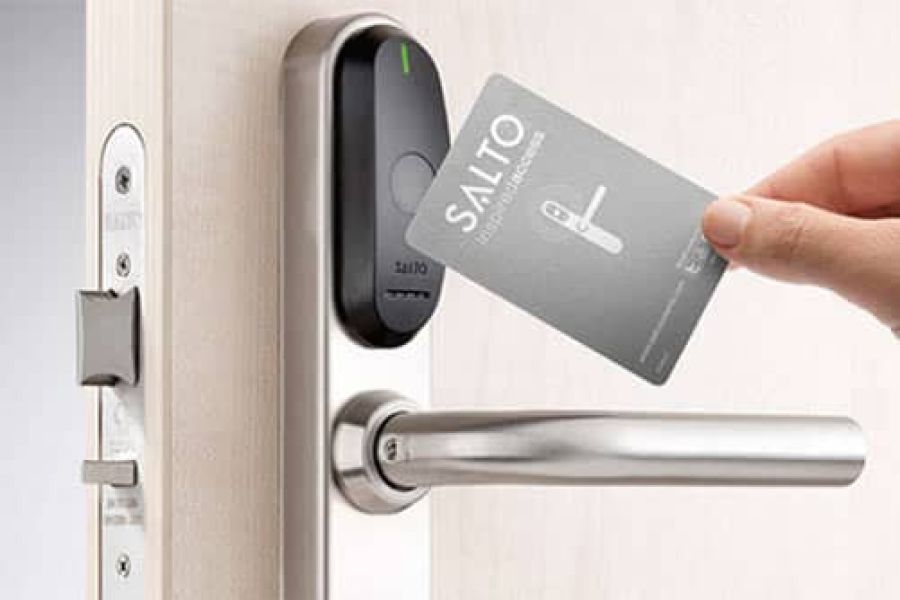
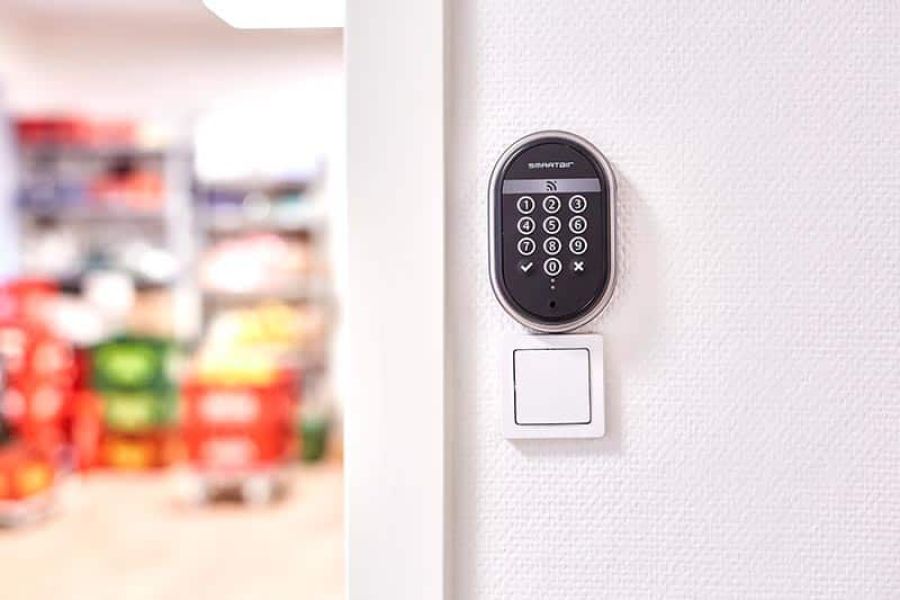
We are an authorized SALTO dealer, and for residential properties, we work with products such as Salto Homelok, which you manage via the cloud. Other applications are better suited to SMARTair, which upgrades existing locks without major modifications, or to ILOQ, where the lock operates without a battery. For single doors in single-family homes and townhouses, we often use Yale locks. The full overview can be found under “Electronic Access Control.”
Behind the product names lies the choice that matters most in everyday life: should the system be offline or online? Offline means that access rights are stored in the lock and the key fob—this also applies to CLIQ, where the key itself grants access. You manage an online system via an app or browser and can block access while you’re somewhere else. Wireless systems like SimonsVoss also minimize the need for wiring. For a single residence, an offline system is often more than enough.
The door and the number of users determine the system—not what we'd prefer to sell.
Here's how the assignment works
We’ll start by assessing the door and determining who needs access to which areas. You’ll then receive two recommended solutions, each with a price and timeline, so you can make an informed decision. Our own technicians will handle the installation, and we’ll set up the system together with you so you can restrict access yourself afterward. If you’d like to arrange for ongoing maintenance, we’ll draw up a service agreement.
Honest advice before you commit
We’ll walk you through the typical pitfalls first: who manages access, and what happens when a resident moves out. We’ll tell it like it is—before it gets expensive. If you take a broader view of home security, access control is closely linked to theft and burglary prevention, as well as window locks.
To allow guests to enter as well, many people combine access control with a private intercom system.
Call 82 82 82 09 or send us a message through the contact form to have your door inspected by a locksmith.
Frequently Asked Questions About Access Control for Private Use
You can block it in the system and get a new one. By comparison, a lost key requires the lock to be reset.
Yes, but check with the landlord first. If you choose a solution that attaches to the existing lock on the door, the modification is minimal, and the door can be restored to its original condition when you move out.
Most battery-powered locks provide a warning before the battery runs out, and there is an emergency opening mechanism on the door. If you choose a battery-free system like ILOQ, this isn't an issue.
In a system that logs entries, you can track which key fob or code opened the door and when. If multiple households share the same door, we’ll agree in advance on what should be logged and for how long.

Access control makes it easy to:
Get non-binding advice about access control
References
KEYPARTNER has installed access control at, among others:
LH wooden beam
Casino House
E/F The View Margretheholmen
Hotel Postgaarden
Do you need advice?
At Keypartner, we are ready to help you choose the right access control system. We offer professional advice based on many years of experience and in-depth knowledge of access control. Our goal is to ensure that you get the best solution that suits you specifically. Our team of experienced locksmiths is ready to advise you on everything from installation and setup to maintenance and upgrading of your access control system or whether an electronic access control system is necessary to meet your requirements for security for access to the building.
It’s also worth considering our other services in the areas of locking systems, automatic door operators, and intercoms, which can be integrated with our access control solutions to create a cohesive and comprehensive security system for your property.
At Keypartner, we understand the importance of protecting what is most important to you. Our approach is to listen to your needs and together find the best solution that ensures security and safety for your business or housing association. Contact us today for a no-obligation chat about how we can help you secure your valuables.
Somersault
Salto's access control solutions are scalable and can be adapted to any need, making them ideal for both small businesses and large, complex facilities.
SimonsVoss
One of the most notable features of SimonsVoss systems is their wireless locking systems that allow users to control access without the use of traditional keys, reducing complexity and increasing security.
Iloq
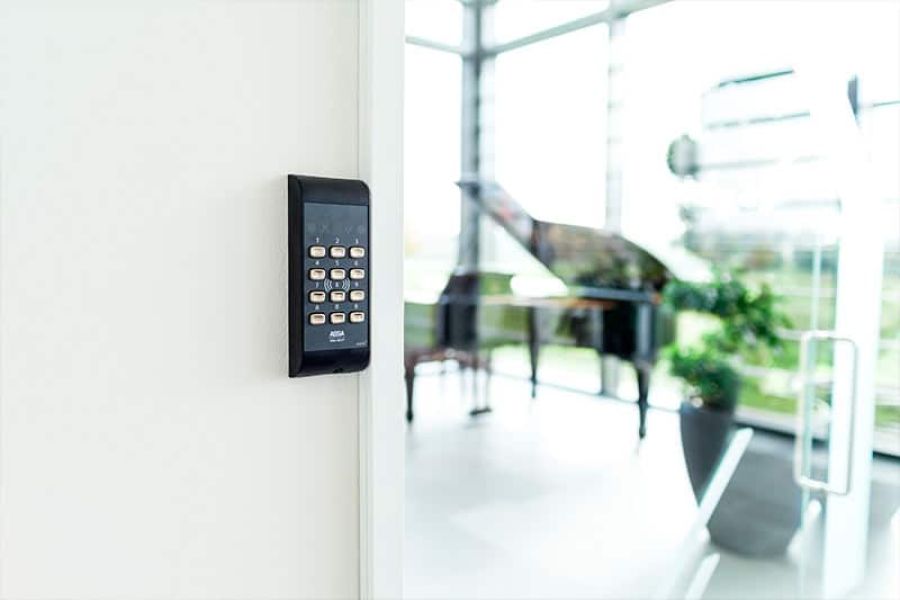
Iloq is known for its innovative approach to access control, offering solutions that do not require batteries or external power supply for their locks.
ARX – Access Control
Arx access control systems are systems suitable for a variety of applications, including commercial buildings, public institutions and industrial areas.
Smartair
Smartair's biggest advantage is the ability to easily upgrade existing locks to electronic access control without the need for extensive remodeling.
CLIQ
CLIQ access control combines traditional locking systems and electronic access control with programmable smart keys. It is therefore an easy solution without the use of cables.