Residential Doorphone – You Decide Who Comes In
A doorphone only becomes interesting the day it stops working. Then the guest is left standing on the street, and the contractor calls on his cell phone instead. A residential doorphone takes care of the traffic at your front door: you can see who’s ringing the bell and let them in without having to go downstairs. We advise you on the system and install it. We also provide after-sales service.
What a residential doorphone should be able to do
The choice is less about the brand and more about how your home is built and who should be able to open the door on a daily basis. Three questions determine most of it.
Audio or video?
An audio system is less expensive to purchase and will provide reliable service for many years. Video systems cost more, but in return, you’ll know who’s outside before you press the open button. If you’d like to see this type of system, we’ve compiled a list of options for video door phones.
Wired or wireless?
In newer homes and in properties with intact wiring, a wired system is usually the obvious choice. Older properties are a different story, as new wiring can be the most expensive single item in the entire project. That’s why we often recommend a wireless model like WelcomeBob when there’s no existing wiring. We’ll make our recommendation once we’ve seen the door.
App and Remote Opening
A digital intercom system can forward the call to your phone so you can let the mail carrier in while you're at work. Learn more about how these systems work at digital intercom.
Residential Door Phones for Apartments and Cooperative Housing
If you live in a multi-unit building, your intercom unit is part of the building’s common system. Therefore, you can rarely change it on your own—the decision rests with the homeowners’ association or the property manager. We’re happy to handle that discussion, and the overall setup for apartment buildings consists of an intercom system connecting to individual apartments and, for building boards, an intercom system connecting to the homeowners’ association. If only your own intercom unit needs to be replaced or repaired, we’ll handle it as a single job.
Doorbell for single-family homes and townhouses
In a house, there’s only one door to worry about, and it has to work every time. Typically, we combine a video unit at the door with app access and an electronic door lock, so that communication and unlocking are integrated into a single solution. If you have a fence or gate, we install the intercom system at street level.
Residential door phone with access and locking features
A door phone rarely stands alone. It can be connected to a private access control system, so that access cards and codes are managed in one place, and it can work in conjunction with an automatic door opener if the door is to open on its own. We take responsibility for the entire system, so you don’t end up with three suppliers pointing fingers at each other.
Installation and service throughout Copenhagen
We work with systems from Scantron, Siedle, Videx, and WelcomeBob, and we also service systems that we did not install ourselves. Our technicians have completed a four-year locksmith training program, and we offer 24-hour service in Copenhagen at 82 82 82 09. If you’d like a professional assessment of your door before making a decision, we’ll start with a no-obligation consultation. Check to see if we cover your address under “Areas,” or write to us via “Contact.”
Call 82 82 82 09 to receive two recommended solutions, including prices and timelines.
Frequently Asked Questions About Residential Door Phones

Access control makes it easy to:
Get non-binding advice about access control
References
KEYPARTNER has installed access control at, among others:
LH wooden beam
Casino House
E/F The View Margretheholmen
Hotel Postgaarden
Do you need advice?
At Keypartner, we are ready to help you choose the right access control system. We offer professional advice based on many years of experience and in-depth knowledge of access control. Our goal is to ensure that you get the best solution that suits you specifically. Our team of experienced locksmiths is ready to advise you on everything from installation and setup to maintenance and upgrading of your access control system or whether an electronic access control system is necessary to meet your requirements for security for access to the building.
It’s also worth considering our other services in the areas of locking systems, automatic door operators, and intercoms, which can be integrated with our access control solutions to create a cohesive and comprehensive security system for your property.
At Keypartner, we understand the importance of protecting what is most important to you. Our approach is to listen to your needs and together find the best solution that ensures security and safety for your business or housing association. Contact us today for a no-obligation chat about how we can help you secure your valuables.
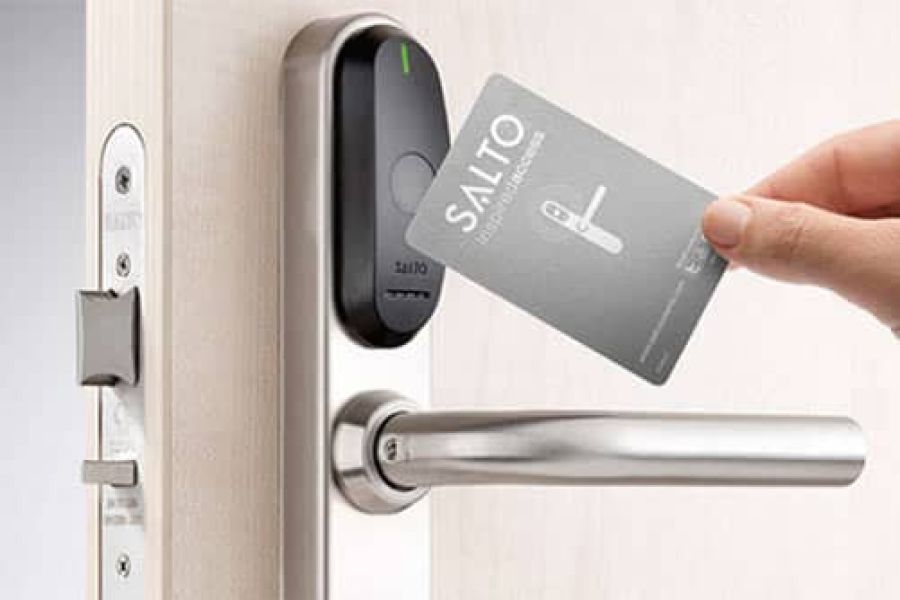
Somersault
Salto's access control solutions are scalable and can be adapted to any need, making them ideal for both small businesses and large, complex facilities.
SimonsVoss
One of the most notable features of SimonsVoss systems is their wireless locking systems that allow users to control access without the use of traditional keys, reducing complexity and increasing security.
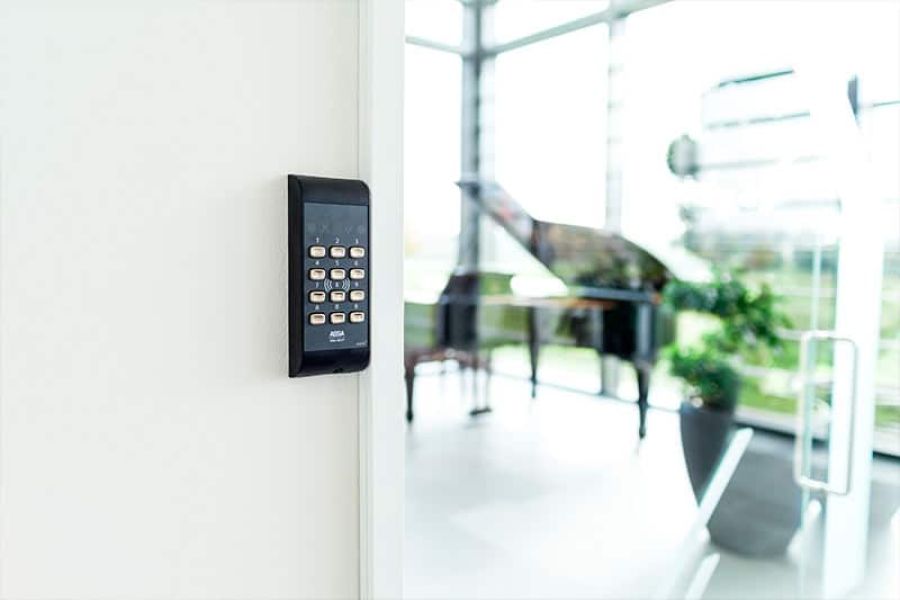
Iloq
Iloq is known for its innovative approach to access control, offering solutions that do not require batteries or external power supply for their locks.
ARX – Access Control
Arx access control systems are systems suitable for a variety of applications, including commercial buildings, public institutions and industrial areas.
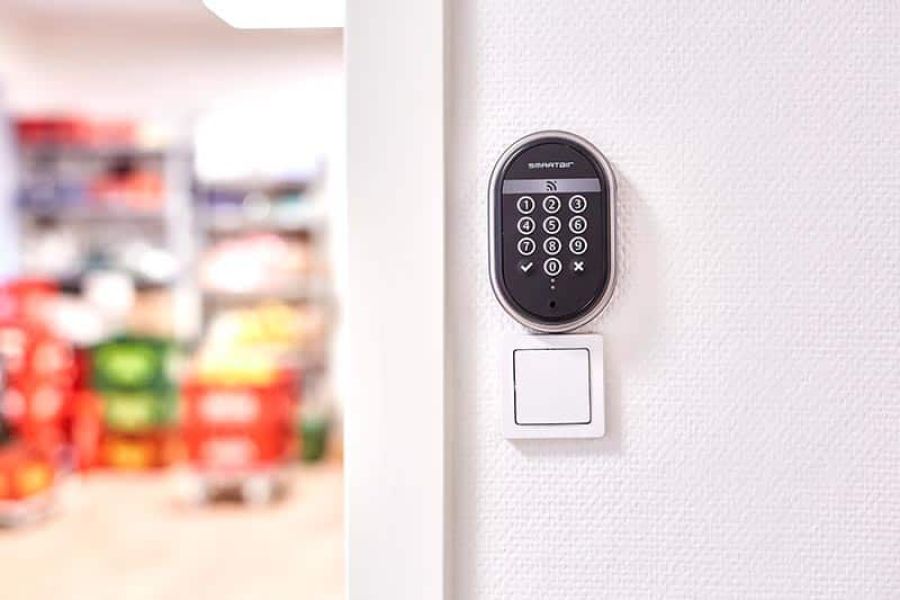
Smartair
Smartair's biggest advantage is the ability to easily upgrade existing locks to electronic access control without the need for extensive remodeling.
CLIQ
CLIQ access control combines traditional locking systems and electronic access control with programmable smart keys. It is therefore an easy solution without the use of cables.