Biometric access control
As security requirements grow and the need for effective access control increases, biometric solutions have become more widespread. One of the most common forms is fingerprint access control, where the user’s unique fingerprint serves as the key. This provides a solution that is both secure and convenient—but one that also requires careful consideration of ethical and legal issues.
At Keypartner, we offer consulting services and solutions in the field of biometric access control. Our approach is always to ensure that the technology is used where it makes sense, in a way that complies with applicable regulations and respects users’ privacy.
What does it mean to have fingerprint access control?
Fingerprint access control is a form of biometric access control in which the door is opened using a scanner that recognizes the user's fingerprint. When the fingerprint matches an authorized template in the system, access is granted.
The technology is designed to be fast, accurate, and secure. Since fingerprints are unique, they are extremely difficult to copy or misuse—making this solution ideal for environments that require a very high level of security.
The Benefits of Biometric Access Control
There are several good reasons to choose biometric access control:
Unparalleled security
Fingerprints cannot be lost or shared in the same way as keys, tokens, or codes. This significantly reduces the risk of unauthorized access.
Ease of use
The user doesn't need to carry a key fob or remember a code. Access is always right at your fingertips—literally.
Logging and Documentation
The system can accurately track who has accessed a specific area and when. This provides transparency and makes it easier to manage security incidents.
Important information about fingerprint access control
Biometric data is a particularly sensitive category of personal information, and its processing is governed by the GDPR. Therefore, when selecting biometric systems—including fingerprint-based access control—businesses must have a clear purpose, a lawful basis for processing, and clear communication with users.
In addition, biometric systems can present practical challenges. In some cases, fingerprint readers may have difficulty reading fingerprints correctly if the finger is wet, dirty, or damaged. For this reason, many choose to combine biometric access control with an alternative method, such as a key fob or PIN, so that users always have a backup option.
For the same reason, biometric solutions are not ideal in environments with many different user groups. In such cases, access control using tokens or cards is a far more appropriate solution.
Where does fingerprint access control make the most sense?
Although biometric solutions aren’t for everyone, there are a number of scenarios in which they can be particularly valuable:
Companies with high security requirements
In companies that handle sensitive data, laboratories, server rooms, or high-value areas, fingerprint access control can be an ideal solution. It ensures that only authorized employees can gain access—and provides full traceability.
Industry and Manufacturing
In production environments where many employees share access to the same areas, biometric access control can make it easier to keep track of who is coming in and out. Here, the solution can be combined with access logging for better control.
Office buildings and administrative environments
For businesses that want to eliminate the need for keys and access cards, and where it is important to be able to document access, fingerprint-based access can be a practical and secure alternative.
Fingerprint access control as part of a comprehensive security system
At Keypartner, we rarely recommend using biometric systems on their own. Instead, fingerprint access control is often used to complement other solutions—such as keycard systems, intercoms, or alarms.
By combining multiple technologies, it is possible to create a security system that is flexible, secure, and tailored to users’ needs. For some, it makes sense to implement fingerprint recognition as a two-factor authentication method, where a user must both scan their finger and present a token to gain access. This provides an extra layer of security that is difficult to compromise.
Why choose Keypartner?
When it comes to biometric access control, it is important to have a partner who not only understands the technology, but also the relevant laws and ethical considerations. At Keypartner, we have many years of experience advising on and implementing advanced access control solutions.
We’ll help you determine whether fingerprint access control is the right solution for your business—or whether a traditional solution using a key fob and PIN makes more sense. Our goal is always to find the right balance where security, user-friendliness, and accountability go hand in hand.
You're just one step away from finding the right solution today
Are you considering enhancing security with biometric access control? Contact Keypartner for a no-obligation consultation. We’ll review your needs and present your options—both for fingerprint access control and other electronic locking systems.
Call us at 82 82 82 09, and let’s talk about how we can create a solution that gives you peace of mind and full control—in a responsible and future-proof way.
Somersault
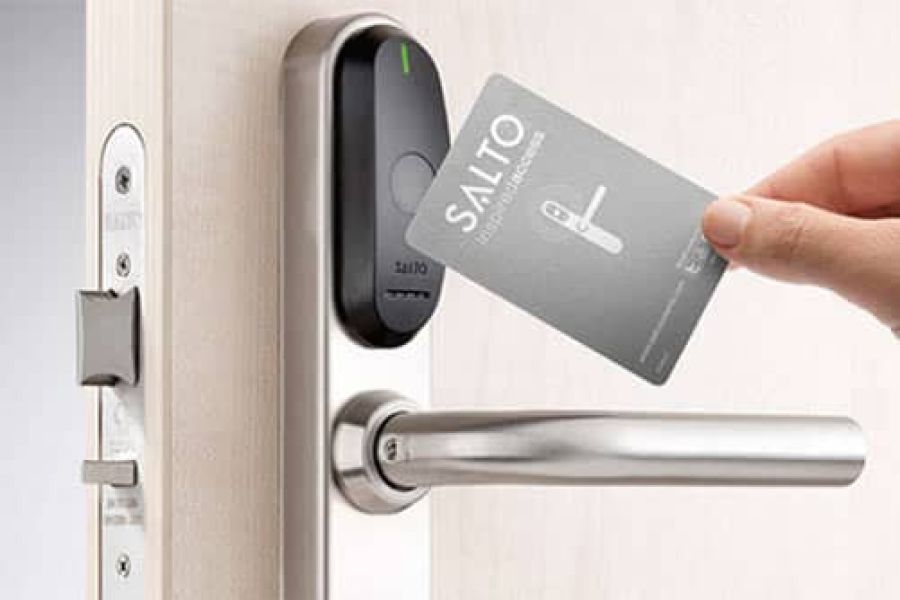
Salto's access control solutions are scalable and can be adapted to any need, making them ideal for both small businesses and large, complex facilities.
SimonsVoss
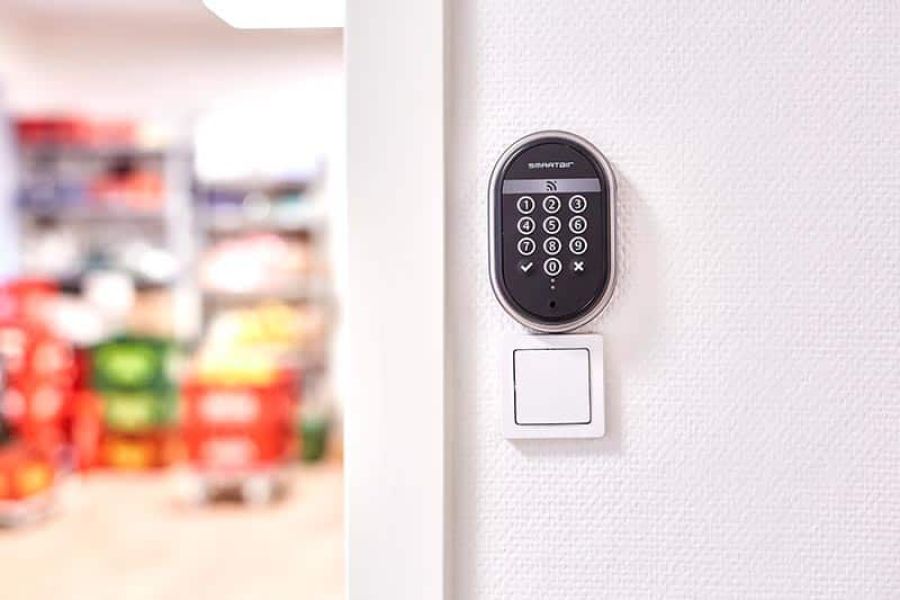
One of the most notable features of SimonsVoss systems is their wireless locking systems that allow users to control access without the use of traditional keys, reducing complexity and increasing security.
Iloq
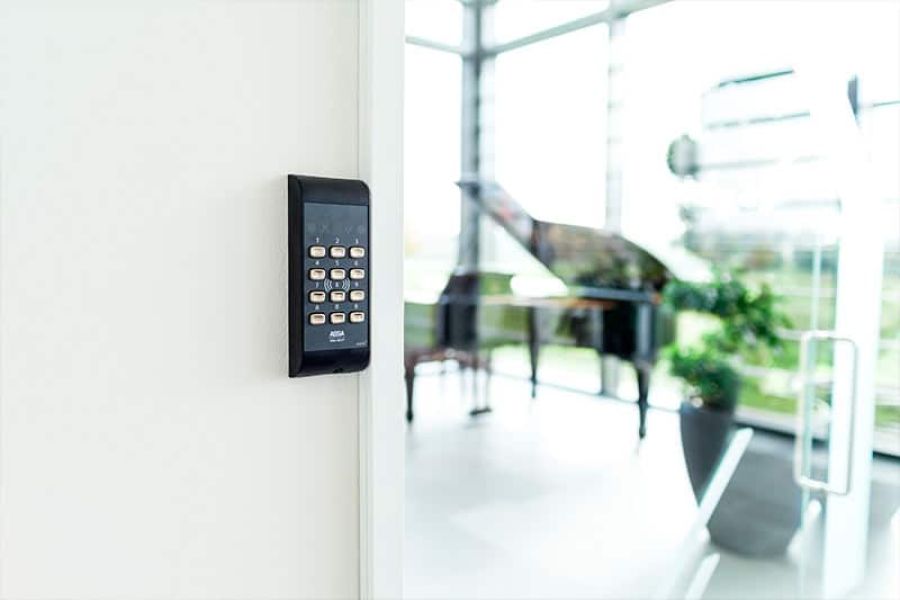
Iloq is known for its innovative approach to access control, offering solutions that do not require batteries or external power supply for their locks.
ARX – Access Control
Arx access control systems are systems suitable for a variety of applications, including commercial buildings, public institutions and industrial areas.
Smartair
Smartair's biggest advantage is the ability to easily upgrade existing locks to electronic access control without the need for extensive remodeling.
CLIQ
CLIQ access control combines traditional locking systems and electronic access control with programmable smart keys. It is therefore an easy solution without the use of cables.