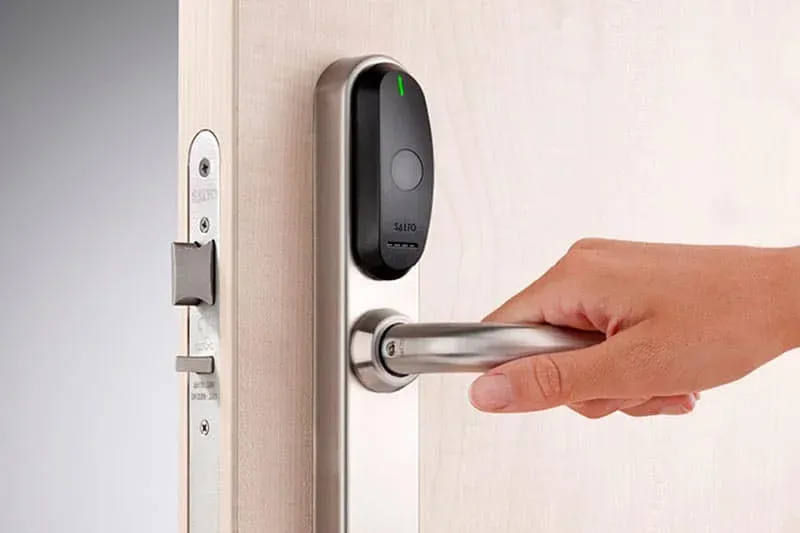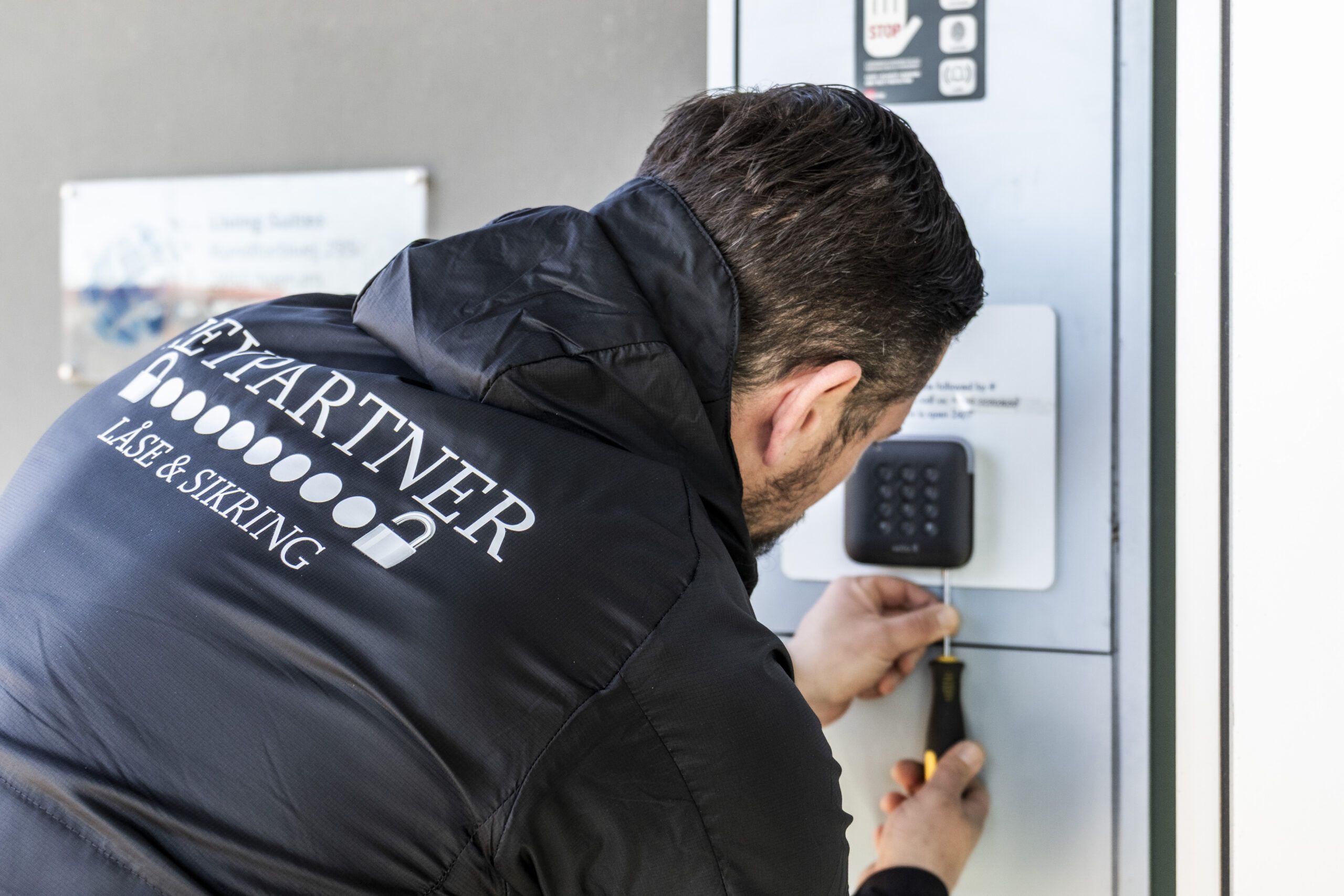
Access Control for Construction Sites

Access Control for Construction Sites – Keep the Site Under Control from the First Shovel Full

A construction site has more users and less oversight than any other phase of a construction project. Trade teams come and go, subcontractors change along the way, and keys are handed out faster than they are collected.

A construction site is not a temporary exception to safety rules. It is the phase where the most accidents occur.

Access control for construction sites shifts access from keys—which no one keeps track of—to access rights with an expiration date. The subcontractor has access for the duration of the work. After that, access is automatically revoked.

At Keypartner, we handle construction projects, development projects, and new construction, and we take responsibility for both security during construction and the locking system that the building will use afterward.

Electronic access control with mobile phone

Get a no-obligation consultation on access control for construction sites.

Why Choose Access Control for Construction Sites

Tools and materials are attractive, and it’s difficult to keep a construction site secure when so many people are coming and going every day. Electronic access control makes it possible to secure the site without getting in the way of the work.

Access with an expiration date

Permissions are granted for the period during which a professional group is actually on site. No one has to remember to revoke anything afterward.

No keys to collect

If a piece disappears, block it off in the center. The locks remain in place, and the rest of the board continues to move.

Records of who was where

The access log shows which user accessed what and when. This is useful when materials are missing or when a sequence of events needs to be reconstructed.

A setup that can be moved

The layout changes as construction progresses. Electronic devices can be repositioned as the temporary structures and storage areas are moved around.

How Access Control for Construction Sites Works in Practice

Most construction sites use offline devices because there is rarely a network or a permanent power supply in the areas that need to be secured. The devices are mounted on gates, containers, and site trailers, and they run on battery power without any wiring.

The user unlocks the door with a key fob or smartphone. Access rights are stored on the access medium and are updated when the user passes an update point or retrieves them in the app. This allows you to change or revoke access rights centrally, even if the lock itself is offline.

The level of detail that can be controlled depends on the system you choose. It’s worth clarifying this early on, because it’s harder to switch platforms once half the space has been fitted out.

From construction site to completed building

This is the decision that will cost the most if it is made too late. Securing the space and the final locking system are interrelated, but they are often treated as two separate purchases, each with its own supplier and timeline.

The locksmith trade traditionally works with a temporary locking system, which is used during construction and is later replaced by the building’s permanent system. The advantage is that access for tradespeople can be completely locked out upon handover, without the building owner having to take over a system for which keys have been issued for two years.

If the rights structure for the completed building is planned during the design phase, the temporary solution can be set up in a way that aligns with the final outcome. Access levels for residents, tenants, or operations staff can be defined before anyone moves in.

We tell it like it is before it gets expensive

As part of the overall security measures for the site

Video surveillance is a natural complement because the access log shows that a gate was opened, while the footage shows what happened. In areas with recurring thefts, this combination is often what makes a difference.

The foundation remains electronic access control with a well-thought-out permissions model, and a locking system that was designed for the building rather than pieced together during construction.

Why choose Keypartner?

We are a team of certified installers who have completed a four-year locksmith training program and continue to receive ongoing training. We have extensive experience with highly complex properties where multiple entrances, utility rooms, and common areas must be integrated into a single access system.

We work with several of the market’s leading systems: SALTO Space, SALTO KS, SALTO Homelok, SimonsVoss, Smartair, and Stroxx with Xlock software. Because we are not tied to a single platform, we make recommendations based on the scope of the project and the building’s future operations.

We can handle both small tasks and large projects, and we coordinate with the various teams that need to be involved along the way.

Take the next step in securing your construction site

We’ll start with a tour of the site and a review of the construction plan. After that, you’ll receive a recommendation and a quote, along with clear guidance on what decisions should be made now—because it will be more expensive later.

Call us at 82 82 82 09 for a no-obligation chat. We'll take care of everything so you don't have to worry about any loose ends.

  • Can access control work without power or a network?

    Yes. Most construction site solutions are based on battery-powered offline devices that do not require cabling. The access rights are stored on the chip or mobile device and are updated when the user passes an update point.
  • What happens to the system once construction is complete?

    It depends on how the solution is designed from the outset. If it is planned in conjunction with the building’s final locking system, parts of it can be reused, and the contractors’ access points can be locked upon handover. We recommend making that decision early on.
  • How do we handle subcontractors who are on-site only for a short time?

    They are granted access for the exact duration of the project and to the areas where they will be working. Access expires automatically, so no one has to go hunting for access tokens afterward.
  • Can we see who's been at the site?

    The access log shows which access medium is used, where, and when. Please note that it documents access to the secured areas; it is not a complete staff roster.
  • Can the solution be expanded as we go?

    Yes. The layout changes, and units are added or moved as construction progresses. That’s why it’s better to choose a system that can be scaled rather than addressing each phase separately.

Somersault

Salto's access control solutions are scalable and can be adapted to any need, making them ideal for both small businesses and large, complex facilities.

Read more about it

SimonsVoss

One of the most notable features of SimonsVoss systems is their wireless locking systems that allow users to control access without the use of traditional keys, reducing complexity and increasing security.

Read more about it

Iloq

Iloq is known for its innovative approach to access control, offering solutions that do not require batteries or external power supply for their locks.

Read more about it

ARX – Access Control

Arx access control systems are systems suitable for a variety of applications, including commercial buildings, public institutions and industrial areas.

Read more about it

Smartair

Smartair's biggest advantage is the ability to easily upgrade existing locks to electronic access control without the need for extensive remodeling.

Read more about it

CLIQ

CLIQ access control combines traditional locking systems and electronic access control with programmable smart keys. It is therefore an easy solution without the use of cables.
Read more about it

Read more

Access Control and Alarms

Access Control and Alarms – Two Systems That Should Work Together

The alarm goes off at two in the morning. No one can say whether it was an employee with valid access or whether there was actually someone there who shouldn't have been.

This happens when the two systems operate independently. Access control and the alarm system serve two different purposes: access control determines who is allowed to enter, while the alarm system responds when someone moves within the building. If they are integrated, they can answer the question immediately.

At Keypartner, we help small and medium-sized businesses as well as large companies set up access control so that the alarm system can be built on top of it.

Electronic access control with mobile phone

Get a no-obligation consultation on access control and alarm systems.

Why Should Access Control and Alarms Be Integrated?

When the systems are independent, employees become the middlemen. They have to remember a code on the keypad next to the door, in addition to the access card they’ve already used. That’s where the errors occur.

Login and logout follow the access rules

The first employee to arrive in the morning disarms the alarm using their access credentials. The last person to leave rearms it, without anyone having to remember to do so.

Fewer false alarms

False alarms waste time and tie up response teams. If the alarm goes off because a valid user has entered the premises, the monitoring center has no reason to dispatch a response team.

A single story to read

The access log and the alarm event are assigned the same timestamp. You can see which access token was used and what happened afterward.

Matching zones

The alarm zones can be configured to correspond to the access levels you have already defined. The warehouse can remain active while the office is in use.

Here's how the interaction works in practice

The integration typically takes place between the access control system and the alarm monitoring center, which exchange signals regarding who has entered and which zone should be active. If a user presents their access card at the outer door outside of working hours, the system can deactivate the alarm for the specific zone to which the user has access rights.

The extent to which integration is possible depends on the two systems. Some combinations communicate directly with each other. Others must be linked via relays or a network integration, which limits the ability to control them in detail.

That’s why the order matters. If you choose an alarm system and an access control system separately and only ask afterward whether they can work together, you’ll often end up with the simplest solution—or an extra bill.

What does it take to make it work?

We do not supply the alarm system ourselves. We work with a regular partner on the alarm component, and we are responsible for ensuring that the entire system works—including the interface between the alarm and the access control system.

It’s worth stating this clearly, because that’s exactly where the division of responsibility causes these kinds of projects to go awry. When access control, alarm systems, and door systems are handled by different vendors, with no one taking overall responsibility, problems end up falling between the cracks.

Three things need to be clarified before anyone sets anything up. Which zones should the alarm cover, and what access levels should they reflect? Who at your organization is authorized to arm and disarm the system, and what happens if that person is on vacation? And what should happen when an alarm is triggered—call the security guard, call people on an on-call list, or something else?

We tell it like it is—before it gets expensive.

Access Control and Alarms as Part of the Overall Security System

Access and alarm systems cover two layers. Video surveillance covers a third, because the footage shows what actually happened, whereas the log only shows that a door was opened.

If your building has an intercom or an automatic door, these should be taken into account as well. An automatic door that remains open for ten seconds is relevant for both access control and alarm settings.

The foundation is still electronic access control with a well-designed permissions model. Without it, alarm zones become a matter of guesswork.

Why choose Keypartner?

We are a team of certified technicians who have completed a four-year locksmith training program and continue to receive ongoing training. We specialize in locks and access control, and that’s what your alarm system should rely on.

We work with several of the market’s leading access control systems: SALTO Space, SALTO KS, SALTO Homelok, SimonsVoss, Smartair, and Stroxx with Xlock software. Because we are not tied to a single platform, we can choose the system that integrates with the alarm system required for the job.

We install the access system ourselves, coordinate with the alarm provider, and offer a service contract afterward.

Get advice on access control and alarms

We’ll start with a walkthrough of the building, the doors, and how you use the house on a daily basis. Then you’ll receive a recommendation and a price—along with clear instructions on what needs to be clarified with the alarm provider before we get started.

Call us at 82 82 82 09 for a no-obligation chat. We'll take care of everything so you don't have to worry about any loose ends.

  • Can our current alarm system be integrated with access control?

    Often, yes, but it depends on the age of the alarm system and which interfaces it supports. We’ll review the system together with our alarm partner and clearly explain what’s possible before you make a decision.
  • Who is responsible when two systems need to work together?

    We are responsible for the access control component and for ensuring interoperability between the systems. We provide the alarm system through a regular partner. You have a single point of contact for the project and do not need to coordinate between the various teams yourself.
  • Should we choose the alarm system or the access control system first?

    Access control is usually the foundation, because permissions and zones define what the alarm system should respond to. But the decision should be made with both systems on the table, so that integration isn’t an afterthought.
  • How much does it cost to integrate the two systems?

    It depends on how directly the two systems can communicate with each other. Integrating two modern platforms is significantly simpler than a solution that has to be connected via relays. We’ll provide a fixed price once we’ve inspected the system.
  • Can we see who turned off the alarm?

    Yes, when users log in and out through the access system, the access log shows which user did so and when.

Somersault

Salto's access control solutions are scalable and can be adapted to any need, making them ideal for both small businesses and large, complex facilities.

Read more about it

SimonsVoss

One of the most notable features of SimonsVoss systems is their wireless locking systems that allow users to control access without the use of traditional keys, reducing complexity and increasing security.

Read more about it

Iloq

Iloq is known for its innovative approach to access control, offering solutions that do not require batteries or external power supply for their locks.

Read more about it

ARX – Access Control

Arx access control systems are systems suitable for a variety of applications, including commercial buildings, public institutions and industrial areas.

Read more about it

Smartair

Smartair's biggest advantage is the ability to easily upgrade existing locks to electronic access control without the need for extensive remodeling.

Read more about it

CLIQ

CLIQ access control combines traditional locking systems and electronic access control with programmable smart keys. It is therefore an easy solution without the use of cables.
Read more about it

Read more

Access Control for Businesses

Access Control for Businesses – Control Over Who Enters and When

A single lost key can mean having to replace the entire locking system. That’s the kind of expense that affects businesses where many people need to go in and out through many doors.

Access control for businesses shifts access from physical keys to permissions that you manage yourself. If an employee leaves, you can revoke their access centrally—without having to track down a key.

At Keypartner, we help small and medium-sized businesses as well as large corporations with access solutions that keep operations running smoothly. We take responsibility for the entire process—from the initial assessment of the building to ongoing maintenance afterward.

Electronic access control with mobile phone

Get a no-obligation consultation on access control for businesses.

Why Choose Access Control for Businesses?

Key management takes time. It also requires oversight, because no one knows for sure where the copies are.

Access I can close right away

If a key is lost, you can deactivate it centrally. No need to reprogram the locks throughout the entire house.

Permissions by door, zone, and time period

The IT staff member enters the server room. The cleaning staff comes in the evening, but only to the areas that need to be cleaned.

Proof of Access

The access log shows who was where and when. This is useful if equipment goes missing or if the insurance company asks.

Fast onboarding and offboarding

New employees are granted access the same day. Access is automatically revoked on their last day of work.

How an Access Control System Works in Practice

The employee holds a key fob or cell phone up to the reader at the door. The system checks the person’s access rights and opens the door only if the person is authorized to enter that specific location at that exact moment.

Behind the reader lies the part that’s critical to operations: the permissions model, which determines what each user group can do. It’s worth taking the time to set this up properly before anything goes live. A well-thought-out structure ensures that a new department or lease can be added later without requiring a redesign.

Online, offline, or a combination?

In many companies, this is the right approach. The exterior doors operate online, while the interior doors operate offline. When a user passes an online access point, the permissions on the token are updated, and the token relays this information to the offline doors.

You'll have centralized management without having to run cables to every single door. The best solution for you depends on the size of the building and how often access permissions change.

What should you consider before choosing a system?

The costly surprises in an access project rarely stem from the lock itself. They stem from what wasn't clarified in advance.

The door environment is the classic pitfall. A worn-out door with the wrong door closer will cause operational problems, no matter how good the access system is. That’s why we inspect the doors before we provide a quote.

Integrations are next. Should the access control system communicate with the automatic door opener or the intercom? If planned from the start, it costs significantly less than retrofitting.

And then there’s the question most people skip over: Who manages the system for you on a day-to-day basis? Without a designated person in charge who has access to the administration, you’ll gradually lose track of things.

We tell it like it is—before it gets expensive.

Access Control for Businesses as Part of an Overall Security Strategy

The access control system doesn't have to stand alone. We often integrate electronic access control with automatic door systems and video surveillance, so that management is centralized in one place rather than spread across multiple vendors.

Most modern platforms support multiple access methods simultaneously. Some user groups use key fobs, while others use an app. A code is ideal for doors where no physical item needs to be handed out. For particularly sensitive doors, you can add two-factor authentication on top of that.

Less vulnerability. More control. More security.

Why choose Keypartner?

We are a team of certified technicians who have completed a four-year locksmith training program and continue to receive ongoing professional development.

We work with several of the market’s leading systems: SALTO Space, SALTO KS, SALTO Homelok, SimonsVoss, Smartair, and Stroxx with Xlock software. Because we aren’t tied to a single platform, we make recommendations based on your building and your operations.

We handle the installation ourselves, and we offer a service contract to ensure that the system is maintained going forward.

Take Your Company's Access Control to the Next Level

We’ll start with a tour of the building and a review of how you work. Then we’ll provide you with a recommendation and a quote—along with a clear explanation of what needs to be clarified before we get started.

Call us at 82 82 82 09 for a no-obligation chat. We'll take care of everything so you don't have to worry about any loose ends.

  • How much does access control cost for a business?

    The price depends on the number of doors and their condition. The choice between an online and offline solution also affects the price. We’ll inspect the building first and provide a fixed price, so you won’t face any additional charges along the way.
  • Can we keep our current locks and doors?

    Often, yes. Several systems, including Smartair, are designed to upgrade existing locks without major renovations. We assess the door environment and clearly indicate what can be reused.
  • How long does an installation take?

    It depends on the scope of the project. A small office with just a few doors can be up and running quickly, while a larger property with multiple entrances requires proper planning. You’ll receive a timeline before work begins.
  • Can we start small and expand later?

    Yes. We almost always recommend setting up the access control structure so that it can expand. New doors and rooms can be added to the same system without any modifications.
  • Who is allowed to view the access log?

    You define this as part of your rights management model. We advise you on the setup so that you only retain the necessary data and comply with applicable regulations.

Somersault

Salto's access control solutions are scalable and can be adapted to any need, making them ideal for both small businesses and large, complex facilities.

Read more about it

SimonsVoss

One of the most notable features of SimonsVoss systems is their wireless locking systems that allow users to control access without the use of traditional keys, reducing complexity and increasing security.

Read more about it

Iloq

Iloq is known for its innovative approach to access control, offering solutions that do not require batteries or external power supply for their locks.

Read more about it

ARX – Access Control

Arx access control systems are systems suitable for a variety of applications, including commercial buildings, public institutions and industrial areas.

Read more about it

Smartair

Smartair's biggest advantage is the ability to easily upgrade existing locks to electronic access control without the need for extensive remodeling.

Read more about it

CLIQ

CLIQ access control combines traditional locking systems and electronic access control with programmable smart keys. It is therefore an easy solution without the use of cables.

Read more about it

Read more

src="data:image/svg+xml,%3Csvg%20xmlns='http://www.w3.org/2000/svg'%20viewBox='0%200%201920%201080'%3E%3C/svg%3E"

Access control with app

Access control via app for businesses, commercial properties, and private residences

Access control via an app allows you to manage access directly from your mobile device—it’s simple, flexible, and reliable. The app functions as a modern access medium that, in most systems, can be combined with access tags, cards, or codes, depending on how the solution is configured.

This gives businesses, properties, and private homes better control over access, while also making day-to-day management easier.

At Keypartner, we help implement access solutions that incorporate app-based access as part of a comprehensive and reliable access strategy. Our solutions are tailored to each individual building and the people who use it—whether they are employees, residents, guests, or administrators.

We take full responsibility for the entire solution: from consulting and design to installation, setup, and ongoing support.

Electronic access control with mobile phone

Get a free consultation on access control via app

More flexible access with app-based access control

Traditional keys and access cards can create unnecessary administrative burdens and vulnerabilities in day-to-day operations. Lost keys, access cards that need to be issued, and manual changes take time and often create operational challenges—especially in businesses and properties with many users.

With app-based access control, access can be managed digitally and in real time. The app serves as a flexible access medium, but in most access control systems, the solution can also be combined with access tags, cards, or codes. This makes it possible to tailor access to different user groups and the way the building is used on a day-to-day basis.

It gives you more control—and less paperwork. We provide controlled access as a standard feature. No problem.

Access control via app for modern businesses

App-based access control is currently used in private homes, businesses, and commercial properties. This solution is particularly appealing when access needs to be managed flexibly and users want to use their mobile phones as a means of access without relying on physical keys.

This solution is often used in serviced offices, commercial properties, housing associations, warehouses, and institutions where access needs to be managed simply and efficiently

At KEYPARTNER, we always start by considering how the building is actually used. This means that the solution is tailored to operations, user flow, and security needs—not off-the-shelf packages.

Reliable access with modern access control systems

We work with several of the market’s leading access control systems that support access via an app. For commercial properties and buildings, these include SALTO Space, SALTO KS, SALTO Homelok, SimonsVoss AX2GO, Smartair, and Stroxx with Xlock software. For private residences, there are also solutions such as Yale Doorman, Yale Linus, and Stroxx with the Xlock platform. Which system is the right choice depends on the size of the building, security requirements, management needs, and desired features.

This makes it possible to centralize access control in one place and gain a better overview of the building’s access points and user management. At the same time, day-to-day operations become simpler for those responsible for managing access and security.

Less vulnerability. More control. More security.

We take full responsibility for the entire solution

Access control isn't just about technology. It's about ensuring that the solution operates reliably—even as the building evolves, users change, or needs grow.

At KEYPARTNER, we assist with the entire process—from consulting and design to installation, setup, access control configuration, and ongoing support. We see the solution through to completion and ensure that it works effectively in practice.

We clearly state what makes sense—and what needs to be clarified before the project gets underway.

We tell it like it is—before it gets expensive.

When does app-based access control make sense?

Access control via an app is an ideal solution for businesses and properties that want to reduce the administrative burden of managing keys and cards, achieve more flexible access control, and gain better oversight of users and access levels.

This is particularly relevant when managing a large number of users collectively, or when access requirements change on a daily basis.

Reliable operation starts with quality craftsmanship. And the right solution.

Get advice on access control via the app

At KEYPARTNER, you’ll receive a solution tailored to your building’s operational and security needs—with a focus on reliability, user-friendliness, and responsible consulting.

Call us at 82 82 82 09. We’ll take care of everything so you don’t have to worry about any loose ends.

Somersault

Salto's access control solutions are scalable and can be adapted to any need, making them ideal for both small businesses and large, complex facilities.

Read more about it

SimonsVoss

One of the most notable features of SimonsVoss systems is their wireless locking systems that allow users to control access without the use of traditional keys, reducing complexity and increasing security.

Read more about it

Iloq

Iloq is known for its innovative approach to access control, offering solutions that do not require batteries or external power supply for their locks.

Read more about it

ARX – Access Control

Arx access control systems are systems suitable for a variety of applications, including commercial buildings, public institutions and industrial areas.

Read more about it

Smartair

Smartair's biggest advantage is the ability to easily upgrade existing locks to electronic access control without the need for extensive remodeling.

Read more about it

CLIQ

CLIQ access control combines traditional locking systems and electronic access control with programmable smart keys. It is therefore an easy solution without the use of cables.
Read more about it

Read more

src="data:image/svg+xml,%3Csvg%20xmlns='http://www.w3.org/2000/svg'%20viewBox='0%200%20800%20533'%3E%3C/svg%3E"

Access control with badge

Access control with a key fob – simple, secure, and flexible access

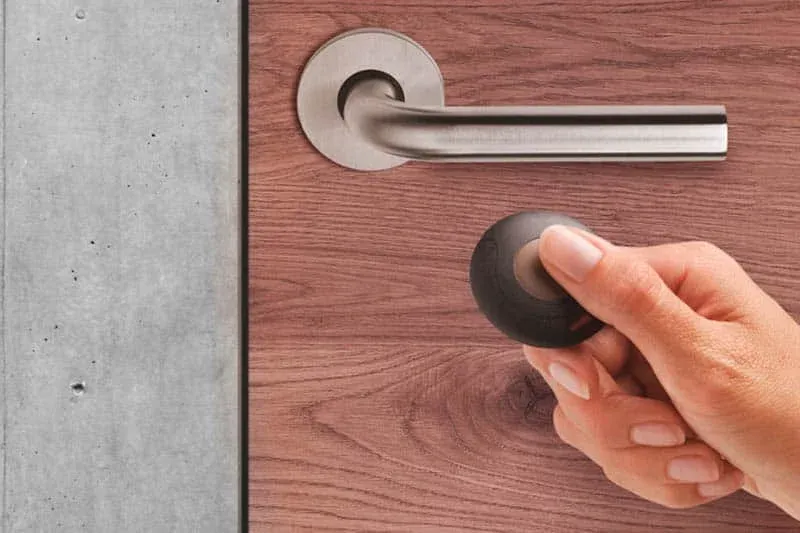
Today, badge access control is one of the most common ways to combine high security with easy administration and keyless living. Residents, employees and guests get exactly the rights they need - and lost badges can be blocked in seconds.

At Keypartner, we help housing associations, businesses, institutions, and private individuals set up modern access solutions where a key fob serves as the access medium. In most systems, the key fob solution can also be combined with access via an app or a code, allowing the solution to be tailored to the building’s users and needs.

Electronic access control with mobile phone

Get a no-obligation consultation on access control with RFID tags

Why choose access control with a key fob

There's good reason why badge access control is a popular solution. Especially for housing associations, but also for private individuals, there are many advantages to the solution:

Greater security than keys

A lost key fob is blocked centrally; no costly changes to the locking system are required.

Flexibility & control

Permissions by door, zone, and time period; temporary guest access.

Complete overview

The access log shows who, where, and when.

Lower operating costs

Less key management; quick onboarding/offboarding.

Scalability

Start small and expand to include more doors/buildings.

How does a token locking system work?

Although the technology behind a token locking system may seem advanced, in practice it is incredibly user-friendly. The user receives a small electronic token that works in the same way as an access card. When the token is held up in front of the reader at the door, the system determines if the person has access and the lock will only open if the token is approved.

Although the solution is called access control with a key fob, many people today choose to combine multiple access methods within the same system. Some users can use a key fob, while others use an app or a code. This provides greater flexibility and makes it possible to tailor access to different user groups without compromising security.

Online and offline key fob-based locking systems

At Keypartner, we offer both online and offline access control, but in many projects, the best solution is a combination of the two technologies.

A typical setup might involve configuring exterior doors and central access points as online doors, while interior doors operate offline. When a user passes through an online access point, access rights are automatically updated on the tag. The tag then transmits this information to the offline doors.

This provides a flexible and cost-effective solution that allows for centralized management without requiring all doors to be connected online. The right combination depends on the size of the building, security requirements, and day-to-day operations.

Who benefits from badge access control?

A deadbolt locking system can be used in virtually any type of building. More and more people are finding it beneficial in private homes - and with good reason. But the solution is also ideal for:

Housing associations

In housing associations, access control using key fobs is an ideal solution for stairwells, storage rooms, and common areas where many residents need access. If a resident loses their key fob, it is deactivated centrally, and a new one can be issued quickly. This eliminates the need for costly lock replacements and streamlines administration.

Companies

In businesses, access control using key fobs is particularly valuable because it makes it easy to manage different levels of access. For example, a receptionist might have access to the reception area and meeting rooms, while an IT employee might have access to server rooms and technical areas. When an employee leaves, access can be revoked immediately, providing far greater security than collecting physical keys.

Institutions and schools

Institutions such as schools, daycare centers, and nursing homes also benefit greatly from access control using access cards. In these settings, it is important that staff, vendors, and any visitors are granted access to the appropriate areas without compromising security. Access card systems can be tailored precisely to specific needs, thereby contributing to both safety and efficient operations.

A key fob-based locking system as part of a larger security system

A key fob-based locking system doesn’t have to stand alone. At Keypartner, we often help integrate key fob-based access control with other security solutions, such as automatic door openers, intercoms, or alarms. This allows us to create a comprehensive security system where everything works together, and where you have a complete overview from a single location.

Most modern access control systems support multiple access methods simultaneously. The access card can be combined with mobile access via an app, PIN codes, or two-factor authentication, depending on the building’s security requirements and users’ needs. This makes it possible to provide different user groups with the access method that best suits their daily routines, while consolidating administration into a single system.

In some cases, biometrics such as fingerprint or facial recognition can also be used with the chip. This makes the solution even more flexible and future-proof.

Why choose Keypartner?

When you choose Keypartner to provide access control with key fobs for your building, you gain a partner with many years of experience in the industry. We partner with leading manufacturers such as SALTO Space, SALTO KS, SALTO Homelok, SimonsVoss, Smartair, and Stroxx with Xlock software. For private residences, we also work with solutions like Yale Doorman and Yale Linus. This means we can provide advice based on the building’s specific needs rather than on a single platform.

We put emphasis on advice and help you choose the right system, whether you need a simple offline solution for a smaller building or a full online solution for a larger organization.

We also take care of installation and maintenance and offer service agreements so you can always be sure that your access control system with badge works optimally.

You're just one step away from finding the right solution today

If you want to do away with keys and have a solution that offers peace of mind, flexibility, and full control, access control with key fobs is the obvious choice. At Keypartner, we’re here to help you every step of the way—from initial consultation to installation and ongoing support.

Call us at 82 82 82 09 for a no-obligation chat about how we can help you get started with the process today.

  • Is badge access control more secure than keys?

    How it works. A lost token is centrally blocked in seconds - instead of re-routing an entire locking system.
  • Online or offline tray system - what should we choose?

    In many cases, you don’t have to choose between online and offline. Modern access control systems can combine both technologies in a single solution. This means, for example, that exterior doors can be managed online, while interior doors operate offline. This gives you a high degree of flexibility and centralized management without unnecessary installation costs.
  • Can we get two-factor (chip + code)?

    How to use. Combine chip + PIN or chip + mobile for higher security on particularly sensitive doors.
  • Who can see the access logs?

    It is set as part of your entitlement model. Keep only necessary data and follow applicable regulations.

Somersault

Salto's access control solutions are scalable and can be adapted to any need, making them ideal for both small businesses and large, complex facilities.

Read more about it

SimonsVoss

One of the most notable features of SimonsVoss systems is their wireless locking systems that allow users to control access without the use of traditional keys, reducing complexity and increasing security.

Read more about it

Iloq

Iloq is known for its innovative approach to access control, offering solutions that do not require batteries or external power supply for their locks.

Read more about it

ARX – Access Control

Arx access control systems are systems suitable for a variety of applications, including commercial buildings, public institutions and industrial areas.

Read more about it

Smartair

Smartair's biggest advantage is the ability to easily upgrade existing locks to electronic access control without the need for extensive remodeling.

Read more about it

CLIQ

CLIQ access control combines traditional locking systems and electronic access control with programmable smart keys. It is therefore an easy solution without the use of cables.

Read more about it

Read more

src="data:image/svg+xml,%3Csvg%20xmlns='http://www.w3.org/2000/svg'%20viewBox='0%200%20800%20533'%3E%3C/svg%3E"

Code-based access control

Code-based access control for businesses, properties, and private residences

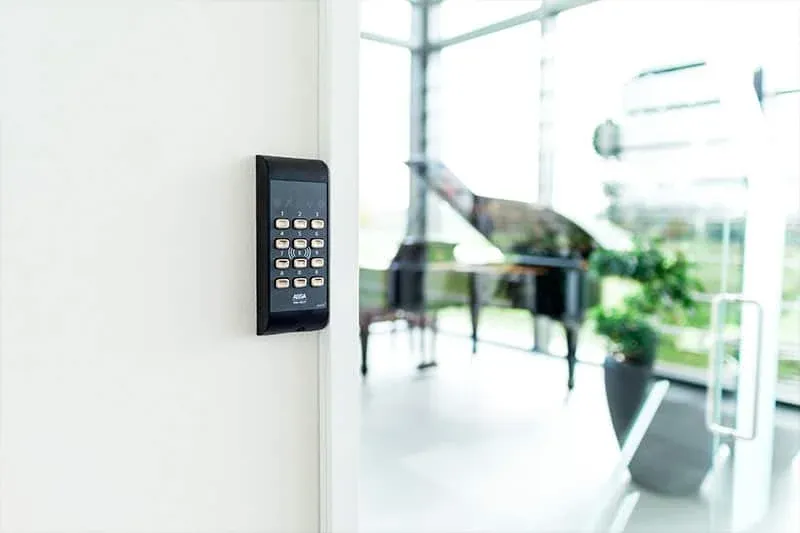
Code-based access control provides a simple and reliable way to manage who has access—and when. It is a flexible solution for businesses, housing associations, commercial properties, and private homes where greater control is needed than traditional keys can provide.

Although the solution is referred to as code-based access control, most modern access systems also support access via an app or a key fob. The types of access used depend on the building’s needs and how the system is configured.

At KEYPARTNER, we design and install code-based access control systems tailored to the building’s operations, users, and security needs. We take full responsibility for the entire solution—from consultation and setup to day-to-day operations.

Electronic access control with mobile phone

Get a no-obligation consultation on access control with a code

Take control of access without having to manage physical keys

Many businesses and property owners face challenges related to lost keys, a lack of oversight, and access levels that become difficult to manage on a day-to-day basis. This creates both security risks and unnecessary administrative work

With code-based access control, access can be managed digitally and tailored precisely to the building’s users and needs. This provides a more flexible solution with enhanced security, reduced vulnerability, and much simpler day-to-day management. At the same time, it reduces the costs associated with lost keys and gives you greater control over the building’s access points.

This solution is particularly well-suited for office buildings, commercial properties, housing associations, warehouses, and institutions, where many people use the same access routes every day. At the same time, code-based access solutions are increasingly being used in private homes, where ease of use and flexible access are top priorities.

We make controlled access a fundamental requirement. No problem.

Code-based access control tailored to your building

There is no one-size-fits-all solution for every building. That is why we always base our designs on the specific operational requirements, user groups, and security needs of the building.

Among other things, we look at the number of doors and access points, how access is managed on a day-to-day basis, what access levels are required, and how the solution should be able to evolve over time.

For some companies, a simple code-based solution is sufficient. Others require a comprehensive access control system that combines codes with access via a key fob, app, or remote management. Most modern access control systems support multiple access methods within a single solution, allowing different user groups to use the access method that best suits their needs.

At KEYPARTNER, we work with products such as SALTO Space, SALTO KS, SALTO Homelok, SimonsVoss, Smartair, and Stroxx with Xlock software for commercial and property management applications. For private residences, we offer solutions such as Yale Doorman, Yale Linus, and Stroxx with the Xlock platform.

We provide honest advice on what makes sense—both technically and financially.

We tell it like it is—before it gets expensive.

Access control solutions for hotels and service access

Code-based access control is particularly useful in environments where access requirements change frequently. In the hotel industry, the access control system is often integrated with the hotel’s booking system via an API. When a guest books a room, a code is automatically generated that is valid only during the relevant period and only for the doors to which the guest needs access.

In businesses and buildings, code-based access solutions are often used on specific doors, while the rest of the building uses key fobs or an app. This might be the case, for example, for goods receiving, waste management, or access for external vendors outside of normal business hours. In these situations, the code-based solution makes it easy to manage access, even when users change frequently.

Reliable access control with a code

When many people use the same building every day, the access control system must operate reliably in practice. It’s not just about the hardware itself, but also about proper design, installation, and ongoing support.

At KEYPARTNER, we primarily work with commercial and complex properties where operations, security, and user management must function smoothly in a busy workday. That is why we take responsibility for the entire process—from design and installation to setup, user structure, service, and ongoing adjustments.

This gives you a single partner who is responsible for the entire process.

When does access control using a code make sense?

Code-based access control is particularly useful if you want to reduce the administrative burden of managing physical keys, gain greater control over common areas, or manage different access levels among users and departments.

It is also an ideal solution for businesses and properties where employees, tenants, or users change frequently, and where access and security need to be managed centrally and flexibly.

Many also choose code-based solutions for specific access points where external partners or suppliers need access outside of normal business hours. In these cases, codes can be easily changed or deactivated without affecting the rest of the access system.

Less vulnerability. More control. More security

Get advice on access control with a code

At KEYPARTNER, we help you find the solution that best fits your building, operations, and security needs—without unnecessary add-ons or unclear processes.

You’ll receive honest advice, clear recommendations, and a professional solution that works in practice. We take full responsibility for the entire process, ensuring that your access solution is reliable both now and in the long term.

We take care of everything, so you don't have to worry about any loose ends.

Call us at 82 82 82 09, and let’s talk about how we can create a solution that gives you peace of mind and full control—in a responsible and future-proof way.

Somersault

Salto's access control solutions are scalable and can be adapted to any need, making them ideal for both small businesses and large, complex facilities.

Read more about it

SimonsVoss

One of the most notable features of SimonsVoss systems is their wireless locking systems that allow users to control access without the use of traditional keys, reducing complexity and increasing security.

Read more about it

Iloq

Iloq is known for its innovative approach to access control, offering solutions that do not require batteries or external power supply for their locks.

Read more about it

ARX – Access Control

Arx access control systems are systems suitable for a variety of applications, including commercial buildings, public institutions and industrial areas.

Read more about it

Smartair

Smartair's biggest advantage is the ability to easily upgrade existing locks to electronic access control without the need for extensive remodeling.

Read more about it

CLIQ

CLIQ access control combines traditional locking systems and electronic access control with programmable smart keys. It is therefore an easy solution without the use of cables.
Read more about it

Read more

Access control with two-factor authentication

Access control with two-factor authentication

Access control with two-factor authentication provides an extra layer of security for businesses and properties where standard access control is not sufficient.

By combining two forms of authentication—such as a code, a token, an app, or a mobile device—it becomes significantly more difficult for unauthorized individuals to gain access. This provides greater security and more control over who can enter the building and sensitive areas.

At KEYPARTNER, we help businesses and property owners implement reliable access control solutions with two-factor authentication—tailored to their daily operations and the building’s security needs.

Electronic access control with mobile phone

Get a no-obligation consultation on access control with two-factor authentication

Enhanced security without unnecessary complexity

Many companies have areas where access requires extra security. These may include server rooms, equipment rooms, storage areas, administrative offices, or common facilities with many users. In such cases, a single access factor can quickly become a vulnerability. If a code is shared or an access token is lost, it can compromise the security of the building.

With access control using two-factor authentication, two separate forms of authentication are required to gain access. This could, for example, be a combination of a code and a token, an app and a PIN, or mobile access combined with personal user verification. This provides significantly better control over who gains access—without making administration unnecessarily complex.

In many companies, two-factor authentication is primarily used outside of normal working hours. This means that employees can, for example, use their access badge alone between 8:00 a.m. and 5:00 p.m., while the system automatically requires both the badge and a code in the evening and at night.

This ensures greater security when the building is less staffed, while also providing employees with a seamless access experience during normal working hours. The solution also reduces the risk of misuse if an access badge is lost or falls into the wrong hands.

Less vulnerability. More control. More security

Access control for businesses with high security requirements

At Keypartner, we primarily work with commercial and complex properties where operations and security must function reliably in practice. That is why we always take into account the building’s risk profile, number of users, access levels, and day-to-day management when designing the solution.

This means that the access system isn't just secure on paper—it actually works in practice.

We take responsibility for the entire process, from consulting and design to installation, setup, user management, and ongoing service. One partner responsible for the whole process.

Integration with modern access control systems

Access control with two-factor authentication is supported by most modern access control systems and can be configured to meet a company’s security needs. This makes it possible to apply different access levels depending on the time of day, user group, or area of the building. For example, employees can use standard card access during daytime hours, while the system automatically requires both a card and a code outside of normal business hours.

At the same time, the solution can be integrated with automatic door systems, intercoms, gate control, and other security systems, making the access solution an integral part of the building’s operations.

We provide honest advice on which features make sense in practice—and which ones don’t.

When does two-factor authentication make sense?

Access control with two-factor authentication is particularly relevant in businesses and properties where access must be precisely managed and protected against unauthorized entry. This applies, for example, to locations with sensitive data, a large number of users, or high security and documentation requirements.

This solution is often used to enhance security outside of normal business hours, when the risk of lost access cards or unauthorized access is greatest. In such cases, the system can automatically switch from standard access to two-factor authentication at specific times of the day.

Reliable operation starts with quality craftsmanship. And the right solution.

Get advice on access control with two-factor authentication

At KEYPARTNER, you get a solution built for operation—not just installation.

We’ll walk you through the project from the very beginning to ensure that access levels, user groups, and security requirements are clarified early on. This helps minimize errors, extra work, and costly add-ons down the line.

We tell it like it is—before it gets expensive.

Call us at 82 82 82 09, and let’s talk about how we can create a solution that gives you peace of mind and full control—in a responsible and future-proof way.

Somersault

Salto's access control solutions are scalable and can be adapted to any need, making them ideal for both small businesses and large, complex facilities.

Read more about it

SimonsVoss

One of the most notable features of SimonsVoss systems is their wireless locking systems that allow users to control access without the use of traditional keys, reducing complexity and increasing security.

Read more about it

Iloq

Iloq is known for its innovative approach to access control, offering solutions that do not require batteries or external power supply for their locks.

Read more about it

ARX – Access Control

Arx access control systems are systems suitable for a variety of applications, including commercial buildings, public institutions and industrial areas.

Read more about it

Smartair

Smartair's biggest advantage is the ability to easily upgrade existing locks to electronic access control without the need for extensive remodeling.

Read more about it

CLIQ

CLIQ access control combines traditional locking systems and electronic access control with programmable smart keys. It is therefore an easy solution without the use of cables.

Read more about it

Read more

Wireless access control

Wireless access control - smart and simple installation

If you want to secure your building without extensive wiring, wireless access control systems are an ideal solution. With wireless technology, you can control access to doors and areas easily and flexibly—and enjoy all the benefits of modern access control.

At Keypartner, we provide wireless access control systems for businesses, housing associations, and private individuals. We tailor solutions ranging from a single door to entire properties—reliable, user-friendly, and scalable.

Electronic access control with mobile phone

Get a no-obligation consultation on wireless access control

What is wireless access control?

Wireless access control means that locks, readers, and control units communicate wirelessly rather than via cables. Instead of running wires through walls and ceilings, the system uses technologies such as radio, Bluetooth, or Wi-Fi.

This makes installation both faster and cheaper, especially in existing buildings, where running cables can be a major undertaking.

Many modern wireless access control systems are also cloud-based. This means that administration takes place online, without the company needing to maintain a local server or handle system backups and maintenance itself.

At the same time, wireless access control offers the same core features as traditional access control systems. Access rights can be managed centrally, users can be added or removed on an ongoing basis, and activities can be logged throughout the building.

The Benefits of Wireless Access Control

There are many good reasons to choose wireless access control

Quick and flexible installation

Minimal disruption to the building; ideal for renovations and older properties.

Flexible expansion

Add doors/users centrally, without running new cables.

Economy

savings on cabling and labor costs.

A Keyless Everyday Life

Access via key fob, code, or mobile device (app/credential).

Security

Modern systems use encrypted connections and strong authentication.

Pro tip:

In many buildings and businesses, wired online main doors are combined with wireless access points on interior doors. This provides high security at the most critical access points and a more cost-effective installation throughout the rest of the building.

Where does wireless access control make the most sense?

Housing associations

In housing associations, wireless access control is ideal for stairwells, basements, bike storage rooms, and common areas. It allows for easy management of a large number of residents and eliminates the need for messy wiring.

Companies

Businesses can use wireless access control for offices, warehouses, and meeting rooms. This provides the flexibility to manage changing staff and access levels, while also allowing the system to be easily scaled as the business grows.

Private homes

Keyless access via key fob or mobile phone. You can grant temporary access to contractors and guests, and revoke it with just a few clicks.

Wireless access control vs. wired access control

Both wired and wireless systems have their advantages:

Wired access control

Reliable and ideal for new construction or high-traffic main entrances (often requires online/real-time logic).

Wireless access control

Ideal for existing buildings where running cables is expensive or difficult. Perfect for interior doors, low-traffic areas, and retrofitting.

Hybrid

Often the best solution: Wired for the most critical doors, wireless for secondary ones. Provides reliable operation, cost-effectiveness, and high flexibility.

Cloud-based access control without a local server

Many wireless access control systems are now managed via cloud-based platforms such as SALTO KS and SALTO Homelok. This means that access management takes place online, without the need for local server operations, VPN connections, or in-house system maintenance. Users, access rights, and events can be managed centrally from a single platform, regardless of how many locations the company has. This makes the solution particularly attractive for companies and chains with multiple locations where administration is centralized in one place. At KEYPARTNER, we have, among other things, delivered this type of solution to companies with multiple locations, where simple administration and high operational reliability are crucial.

At KEYPARTNER, we often find that the best solution is a combination of wired and wireless access points. Wired access points are typically used at main entrances and other critical access points, while wireless access points are used further inside the building.

This provides a solution that is reliable, flexible, and cost-effective.

Integration and expandability

A wireless system doesn’t have to stand alone. It can be integrated with other security solutions, such as digital door phones, automatic door openers, and alarm systems. This gives you a comprehensive solution where everything works together seamlessly, and you always have a complete overview in one place.

Wireless systems can also be combined with app-based access, allowing users to unlock doors directly from their smartphones. This makes the system even more flexible and future-proof.

Why choose Keypartner?

When you choose Keypartner as your partner, you gain access to our many years of experience installing and servicing wireless access control systems in both small and large projects. We partner with leading manufacturers such as SALTO Space, SALTO KS, SALTO Homelok, SimonsVoss, Smartair, and Stroxx with Xlock software. This allows us to tailor the solution that best fits the building’s operations, security requirements, and administrative needs. Whether you need a cloud-based solution for multiple locations or a traditional access system for a single property, we provide advice based on your specific needs rather than on a single platform.

We prioritize providing expert advice and helping you find the system that best suits your needs—whether you represent a housing association, a business, or simply want wireless access control in your home. Call us at 82 82 82 09, and let’s discuss how we can create a solution that gives you peace of mind and full control—in a responsible and future-proof way.

  • Is wireless access control as secure as wired?

    Yes - modern systems use encryption and secure credentials. Choice of doors/location is crucial for operation and risk.
  • How long do the batteries last?

    Depends on door usage, climate and hardware. Schedule service intervals and monitor battery status centrally.
  • When to choose hybrid?

    When main entrances require real-time stability, while interior doors can be solved wirelessly to save cables and time.
  • Can we use our phone as a key?

    Yes, via app credentials. You can combine mobile, token and code as needed.
  • Can wireless access control be managed without a local server?

    Yes. Many modern wireless access control systems are cloud-based and therefore do not require a local server. This reduces the need for operation, backup, and maintenance, and makes it easier to manage access across multiple locations.

Somersault

Salto's access control solutions are scalable and can be adapted to any need, making them ideal for both small businesses and large, complex facilities.

Read more about it

SimonsVoss

One of the most notable features of SimonsVoss systems is their wireless locking systems that allow users to control access without the use of traditional keys, reducing complexity and increasing security.

Read more about it

Iloq

Iloq is known for its innovative approach to access control, offering solutions that do not require batteries or external power supply for their locks.

Read more about it

ARX – Access Control

Arx access control systems are systems suitable for a variety of applications, including commercial buildings, public institutions and industrial areas.

Read more about it

Smartair

Smartair's biggest advantage is the ability to easily upgrade existing locks to electronic access control without the need for extensive remodeling.

Read more about it

CLIQ

CLIQ access control combines traditional locking systems and electronic access control with programmable smart keys. It is therefore an easy solution without the use of cables.

Read more about it

Read more

src="data:image/svg+xml,%3Csvg%20xmlns='http://www.w3.org/2000/svg'%20viewBox='0%200%20800%20533'%3E%3C/svg%3E"

Biometric access control

Biometric access control

As security requirements grow and the need for effective access control increases, biometric solutions have become more widespread. One of the most common forms is fingerprint access control, where the user’s unique fingerprint serves as the key. This provides a solution that is both secure and convenient—but one that also requires careful consideration of ethical and legal issues.

At Keypartner, we offer consulting services on biometric access control and help assess when this technology is the right choice. In practice, we primarily see biometric solutions used in private homes, while businesses are more likely to opt for access via mobile keys, apps, or other digital access methods.

Electronic access control with mobile phone

Get a no-obligation consultation on biometric access control

What does it mean to have fingerprint access control?

Fingerprint access control is a form of biometric access control in which the door is opened using a scanner that recognizes the user's fingerprint. When the fingerprint matches an authorized template in the system, access is granted.

The technology is designed to be fast, accurate, and secure. Since fingerprints are unique, they are extremely difficult to copy or misuse—making this solution ideal for environments that require a very high level of security.

The Benefits of Biometric Access Control

There are several good reasons to choose biometric access control:

Unparalleled security

Fingerprints cannot be lost or shared in the same way as keys, tokens, or codes. This significantly reduces the risk of unauthorized access.

Ease of use

The user doesn't need to carry a key fob or remember a code. Access is always right at your fingertips—literally.

Logging and Documentation

The system can accurately track who has accessed a specific area and when. This provides transparency and makes it easier to manage security incidents.

Important information about fingerprint access control

Biometric data is a particularly sensitive category of personal information, and its processing is governed by the GDPR. Therefore, when selecting biometric systems—including fingerprint-based access control—businesses must have a clear purpose, a lawful basis for processing, and clear communication with users.

In addition, biometric systems can present practical challenges. In some cases, fingerprint readers may have difficulty reading fingerprints correctly if the finger is wet, dirty, or damaged. For this reason, many choose to combine biometric access control with an alternative method, such as a key fob or PIN, so that users always have a backup option.

For the same reason, biometric solutions are not ideal in environments with many different user groups. In such cases, access control using tokens or cards is a far more appropriate solution.

Where does fingerprint access control make the most sense?

Although biometric access control is often associated with high security, it is not necessarily the solution most companies choose today. Many business customers prefer mobile access and digital credentials because they are easier to manage and simpler to implement in larger organizations. That is why, in practice, we see biometric solutions most often used in private homes or in special environments with specific security requirements.

Companies with high security requirements

In some companies with specific security requirements, fingerprint-based access control may be a useful supplement to other access control measures. In many cases, however, companies opt instead for mobile-based access solutions or other forms of digital identification because they are easier to manage across multiple users and locations.

Industry and Manufacturing

In production environments where many employees share access to the same areas, biometric access control can make it easier to keep track of who is coming in and out. Here, the solution can be combined with access logging for better control.

Office buildings and administrative environments

For companies looking to eliminate the need for keys and access cards, mobile access and digital credentials are often the most practical solution. This allows users to use their smartphones as a means of access, while the company retains full control over access rights and logging.

Fingerprint access control as part of a comprehensive security system

At Keypartner, we rarely recommend using biometric systems on their own. Instead, fingerprint access control is often used to complement other solutions—such as keycard systems, intercoms, or alarms.

By combining multiple technologies, it is possible to create a security system that is flexible, secure, and tailored to users’ needs. For some, it makes sense to implement fingerprint recognition as a two-factor authentication method, where a user must both scan their finger and present a token to gain access. This provides an extra layer of security that is difficult to compromise.

When biometric solutions are chosen, they are typically part of a comprehensive access control system. At KEYPARTNER, however, we find that many companies today prefer mobile keys and app-based access over fingerprint recognition because it offers greater flexibility and simpler administration. Biometric access control is therefore often most relevant in private homes or in specific environments where there is a need for additional identity verification.

Why choose Keypartner?

When it comes to biometric access control, it is important to have a partner who not only understands the technology, but also the relevant laws and ethical considerations. At Keypartner, we have many years of experience advising on and implementing advanced access control solutions.

We can help you determine whether biometric access control is the right solution, or whether access via mobile keys, an app, a token, or a code makes more sense in practice. Our advice is always based on the building’s operations, security requirements, and user needs.

At KEYPARTNER, we work with biometric solutions from Stroxx, among other things. It is important to note that biometric access is not supported by all access platforms on the market and should therefore always be evaluated based on the specific requirements of the project.

You're just one step away from finding the right solution today

Are you considering enhancing security with biometric access control? Contact Keypartner for a no-obligation consultation. We’ll review your needs and present your options—both for fingerprint access control and other electronic locking systems.

Call us at 82 82 82 09, and let’s talk about how we can create a solution that gives you peace of mind and full control—in a responsible and future-proof way.

Somersault

Salto's access control solutions are scalable and can be adapted to any need, making them ideal for both small businesses and large, complex facilities.

Read more about it

SimonsVoss

One of the most notable features of SimonsVoss systems is their wireless locking systems that allow users to control access without the use of traditional keys, reducing complexity and increasing security.

Read more about it

Iloq

Iloq is known for its innovative approach to access control, offering solutions that do not require batteries or external power supply for their locks.

Read more about it

ARX – Access Control

Arx access control systems are systems suitable for a variety of applications, including commercial buildings, public institutions and industrial areas.

Read more about it

Smartair

Smartair's biggest advantage is the ability to easily upgrade existing locks to electronic access control without the need for extensive remodeling.

Read more about it

CLIQ

CLIQ access control combines traditional locking systems and electronic access control with programmable smart keys. It is therefore an easy solution without the use of cables.

Read more about it

Read more